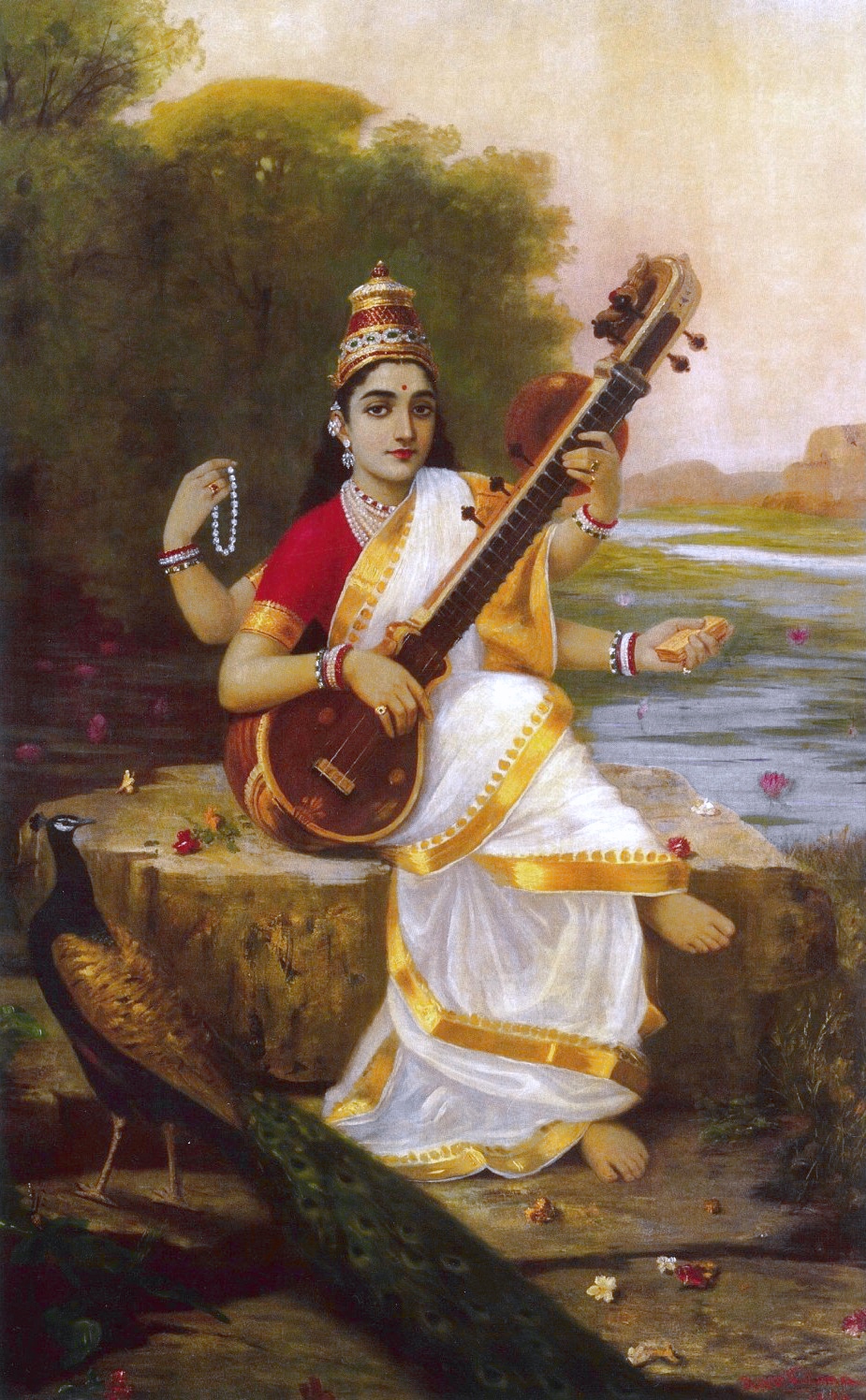
I want to post this as part II of my earlier post on SUDHA MURTHY of INFOSYS. Here it shows how lucky India is for producing ladies of this quality, guts and vision not only to select/leave a job but also select her man and also leave her husband the freedom to continue though she knew she is as good as him in the job.
Subject: THE GIRL WHO WROTE TO JRD
It was April 1974. Bangalore was getting warm and gulmohars were blooming at
the IISc campus. I was the only girl in my postgraduate department and was
staying at the ladies' hostel. Other girls were pursuing research in
different departments of Science.
I was looking forward to going abroad to complete a doctorate in computer
science. I had been offered scholarships from Universities in the US . I had
not thought of taking up a job in India .
One day, while on the way to my hostel from our lecture-hall complex, I saw
an advertisement on the notice board. It was a standard job-requirement
notice from the famous automobile company Telco (now Tata Motors). It stated
that the company required young, bright engineers, hardworking and with an
excellent academic background, etc.
At the bottom was a small line: "Lady Candidates need not apply."
I read it and was very upset. For the first time in my life I was up against
gender discrimination.
Though I was not keen on taking up the job, I saw it as a challenge. I had
done extremely well in academics, better than most of my male peers.
Little did I know then that in real life academic excellence is not enough
to be successful.
After reading the notice I went fuming to my room. I decided to inform the
topmost person in Telco's management about the injustice the company was
perpetrating.
I got a postcard and started to write, but there was a problem: I did not
know who headed Telco I thought it must be one of the Tatas. I knew JRD Tata
was the head of the Tata Group;
I had seen his pictures in newspapers (actually, Sumant Moolgaokar was the
company's chairman then) I took the card, addressed it to JRD and started
writing. To this day I remember clearly what I wrote.
"The great Tatas have always been pioneers. They are the people who started
the basic infrastructure industries in India , such as iron and steel,
chemicals, textiles and locomotives. They have cared for higher education in
India since 1900 and they were responsible for the establishment of the
Indian Institute of Science. Fortunately, I study there. But I am surprised
how a company such as Telco is discriminating on the basis of gender."
I posted the letter and forgot about it. Less than 10 days later, I received
a telegram stating that I had to appear for an interview at Telco's Pune
facility at the company's expense. I was taken aback by the telegram. My
hostel mate told me I should use the opportunity to go to Pune free of cost
and buy them the famous Pune saris for cheap!
I collected Rs 30 each from everyone who wanted a sari. When I look back, I
feel like laughing at the reasons for my going, but back then they seemed
good enough to make the trip..
It was my first visit to Pune and I immediately fell in love with the city.
To this day it remains dear to me. I feel as much at home in Pune as I do in
Hubli, my hometown.
The place changed my life in so many ways. As directed, I went to Telco's
Pimpri office for the interview.There were six people on the panel and I
realized then that this was serious business.
"This is the girl who wrote to JRD," I heard somebody whisper as soon as I
entered the room. By then, I knew for sure that I would not get the job. The
realization abolished all fear from my mind, so I was rather cool while the
interview was being conducted.
Even before the interview started, I reckoned the panel was biased, so I
told them, rather impolitely, "I hope this is only a technical interview."
They were taken aback by my rudeness, and even today I am ashamed about my
attitude. The panel asked me technical questions and I answered all of them.
Then an elderly gentleman with an affectionate voice told me, "Do you know
why we said lady candidates need not apply? The reason is that we have never
employed any ladies on the shop floor. This is not a co-ed college; this is
a factory. When it comes to academics, you are a first ranker throughout. We
appreciate that, but people like you should work in research laboratories.
I was a young girl from small-town Hubli. My world had been a limited place.
I did not know the ways of large corporate houses and their difficulties, so
I answered, "But you must start somewhere, otherwise no woman will ever be
able to work in your factories."
Finally, after a long interview, I was told I had been successful. So this
was what the future had in store for me. Never had I thought I would take up
a job in Pune. I met a shy young man from Karnataka there, we became good
friends and we got married.
It was only after joining Telco that I realized who JRD was: the uncrowned
king of Indian industry. Now I was scared, but I did not get to meet him
till I was transferred to Bombay . One day I had to show some reports to Mr
Moolgaokar, our chairman, who we all knew a SM. I was in his office on the
first floor of Bombay House (the Tata headquarters) when, suddenly JRD
walked in. That was the first time I saw "appro JRD". Appro means "our" in
Gujarati. This was the affectionate term by which people at Bombay House
called him.
I was feeling very nervous, remembering my postcard episode. SM introduced
me nicely, "Jeh (that's what his close associates called him), this young
woman is an engineer and that too a postgraduate.
She is the first woman to work on the Telco shop floor." JRD looked at me. I
was praying he would not ask me any questions about my interview (or the
postcard that preceded it).
Thankfully, he didn't. Instead, he remarked. "It is nice that girls are
getting into engineering in our country. By the way, what is your name?"
"When I joined Telco I was Sudha Kulkarni, Sir," I replied. "Now I am Sudha
Murthy.
"He smiled a kindly smile and started a discussion with SM. As for me, I
almost ran out of the room.
After that I used to see JRD on and off. He was the Tata Group chairman and
I was merely an engineer. There was nothing that we had in common. I was in
awe of him.
One day I was waiting for Murthy, my husband, to pick me up after office
hours. To my surprise I saw JRD standing next to me. I did not know how to
react. Yet again I started worrying about that postcard. Looking back, I
realize JRD had forgotten about it. It must have been a small incident for
him, but not so for me.
"Young lady, why are you here?" he asked. "Office time is over." I said,
"Sir, I'm waiting for my husband to come and pick me up." JRD said, "It is
getting dark and there's no one in the corridor. I'll wait with you till
your husband comes." I was quite used to waiting for Murthy, but having JRD
waiting alongside made me extremely uncomfortable.
I was nervous. Out of the corner of my eye I looked at him. He wore a simple
white pant and shirt. He was old, yet his face was glowing. There wasn't any
air of superiority about him. I was thinking, "Look at this person.. He is a
chairman, a well-respected man in our country and he is waiting for the sake
of an ordinary employee."
Then I saw Murthy and I rushed out. JRD called and said, "Young lady, tell
your husband never to make his wife wait again." In 1982 I had to resign
from my job at Telco. I was reluctant to go, but I really did not have a
choice. I was coming down the steps of Bombay House after wrapping up my
final settlement when I saw JRD coming up. He was absorbed in thought. I
wanted to say goodbye to him, so I stopped.
He saw me and paused. Gently, he said, "So what are you doing, Mrs
Kulkarni?" (That was the way he always addressed me.) "Sir, I am leaving
Telco."
"Where are you going?" he asked. "Pune, Sir. My husband is starting a
company called Infosys and I'm shifting to Pune."
"Oh! And what will you do when you are successful."
"Sir I don't know whether we will be successful."
"Never start with diffidence," he advised me. "Always start with confidence.
When you are successful you must give back to society. Society gives us so
much; we must reciprocate. I wish you all the best."
Then JRD continued walking up the stairs. I stood there for what seemed like
a millennium. That was the last time I saw him alive.
Many years later I met Ratan Tata in the same Bombay House, occupying the
chair JRD once did. I told him of my many sweet memories of working with
Telco. Later, he wrote to me, "It was nice hearing about Jeh from you. The
sad part is that he's not alive to see you today."
I consider JRD a great man; because despite being an extremely busy person,
he valued one postcard written by a young girl seeking justice. He must have
received thousands of letters everyday. He could have thrown mine away, but
he didn't do that.
He respected the intentions of that unknown girl, who had neither influence
nor money, and gave her an opportunity in his company. He did not merely
give her a job; he changed her life and mindset forever.
Close to 50 per cent of the students in today's engineering colleges are
girls. And there are women on the shop floor in many industry segments. I
see these changes and I think of JRD. If at all time stops and asks me what
I want from life, I would say I wish JRD were alive today to see how the
company we started has grown. He would have enjoyed it wholeheartedly.
My love and respect for the House of Tatas remains undiminished by the
passage of time. I always looked up to JRD. I saw him as a role model for
his simplicity, his generosity, his kindness and the care he took of his
employees. Those blue eyes always reminded me of the sky; they had the same
vastness and magnificence.
(Sudha Murthy is a widely published writer and chairperson of the Infosys
Foundation involved in a number of social development initiatives. Infosys
chairman Narayana Murthy is her husband.)
Schizophrenia/ A father looks at drugs
Schizophrenia and clozapine.I am also interested in politics , current affairs , tennis etc.
Thursday, July 02, 2009
Sudha Murthyof INFOSYS,the girl who wrote to JRD TATA
Labels:
INFOSYS,
JRD TATA,
narayana murthy,
sudha murthy,
telco,
women
| Reactions: |
Sunday, June 28, 2009
A Mother should know Child development issues
Subject: Article on developmental issues in children
Main Point: Knowledge for mother about a child's development and
early detection & management of any dev delay.
Category of Topic: Mentally-Challenged
Message: WHAT EVERY MOTHER SHOULD KNOW
Was my baby healthy at birth?"Dear Mom, you brought me into this new land, don't you want to know how
I'm feeling?" this is what the newborn baby seems to be saying
imploringly.
Sure, the new mother should be abreast of her baby's condition:
* What's his birth weight?
* Is he premature?
* Did he cry after birth?
* Is he feeding properly?
* Is he sick?
* Does he have any abnormality?
* Does he need any special treatment?
During the baby's stay in the hospital it is preferred that the mother
be constantly involved in the baby care. This early mother-child bonding
is the 1st step of early intervention to support normal development.
Is my child developing normally?
This is a question that comes to every mother's mind as she fondly
cradles her baby. But unfortunately, very few have a clear concept of
the developmental milestones and we professionals fail to provide the
required information to them.
In an attempt to make up for this shortfall, I put forth here a simple
list of achievements of your little master, for you mothers to go
through:
At three months of age, most babies:
* turn their heads toward bright colors and lights
* move both eyes in the same direction together
* respond to their mother's voice
* make cooing sounds
* bring their hands together
* wiggle and kick with arms and legs
* lift head when on stomach
* become quiet in response to sound, especially to speech
* smile
At six months of age, most babies:
* follow moving objects with their eyes
* turn toward the source of normal sound
* reach for objects and pick them up
* switch toys from one hand to the other
* play with their toes
* recognize familiar faces
* imitate speech sounds
* respond to soft sounds, especially talking
* roll over
At 12 months of age, most babies:
* get to a sitting position
* pull to a standing position
* stand briefly without support
* crawl
* imitate adults using a cup or telephone
* play peek-a-boo and pat-a-cake
* retrieves a hidden toy
* wave bye-bye
* put objects in a container
* say at least one word
* make "ma-ma" or "da-da" sounds
At 18 months of age, most children:
* like to push and pull objects
* say at least six words
* follow simple directions ("Bring the ball")
* pull off shoes, socks and mittens
* can point to a picture that you name in a book
* feed themselves
* make marks on paper with crayons
* walk without help
* point, make sounds, or try to use words to ask for things
* say "no," shake their head, or push away things they don't want
At two years of age, most children:
* use two-to-three-word sentences
* say about 50 words
* recognize familiar pictures
* kick a ball forward
* feed themselves with a spoon
* demand a lot of your attention
* turn two or three pages together
* like to imitate their parent
* identify hair, eyes, ears, and nose by pointing
* build a tower of four blocks
* show affection
At three years of age, most children:
* throw a ball overhand
* ride a tricycle
* put on their shoes
* open the door
* turn one page at a time
* play with other children for a few minutes
* repeat common rhymes
* use three-to-five-word sentences
* name at least one color correctly
Of all these, 4 achievements must be noted:
* Social smile by 2 months
* Head holding by 4 months
* Sitting alone by 8 months
* Standing alone by 12 months
What is developmental delay?
A developmental delay is any significant lag in a child's physical,
cognitive, behavioral, emotional, or social development, in comparison
with the normal.
A baby's rate of development is determined partly before birth,
primarily as a result of genetic make-up and partly due to various
physical insults during and just after delivery. Normal development is
again quite flexible, occurring over a range of time. Definite deviation
beyond that range in any sector of development is developmental delay.
When a child consistently reaches developmental milestones much later
than other children, a professional consultation is usually warranted.
Few babies develop at a uniform rate; most develop quickly in some areas
and slower in others. Some babies reach most or all developmental
milestones slightly later than "average." As long as a child's
development falls within the broad range that is considered normal,
reaching one or more milestones late is generally not a cause for
concern.
Several developmental areas are of interest: gross motor skills (e.g.,
crawling, walking), fine motor skills (e.g., grasping and manipulating
objects), receptive (understanding) and expressive (speaking) language,
self-help (e.g., feeding, dressing), and social and play skills. While
it is important to consider each of these areas, some are more important
predictors of developmental difficulties than others.
Gross motor skills tend to be of particular importance to parents. They
are readily observable and easy to compare from one child to the next.
The timing of concrete achievements such as first steps is usually easy
for any parent to pinpoint. But a particular achievement such as early
walking bears little relationship to later intelligence. Communication
and social skills are generally more important in understanding a
child's developmental progress.
During the first half of the first year, baby's communication skills are
largely nonverbal. Smiling, making eye contact and turning in the
direction of a familiar voice, are all signs that baby is connecting
with and relating to his social environment. Later in the first year,
babbling begins and words may start to appear. In most cases, baby's
vocabulary will continue to grow by leaps and bounds as he moves through
the second year. Again, however, it is the ability to use language to
communicate and relate to the social world that is most important. A
child who has a limited speaking vocabulary late into the second year,
but is able to communicate needs through gestures, point to named
objects in books, and follow simple directions, is most likely not
exhibiting significant developmental delay.
The nature of a child's play also provides important information about
intellectual development. Very young children tend to play alongside,
rather than with, other children. Early play consists largely of using
body and senses to interact with the environment. During the toddler
years there is a move toward pretend play and increasingly interactive
play with other children. Flexibility and creativity become more evident
as a child begins to engage in symbolic play (e.g., using a block to
represent a car) and role-playing (e.g., "I'll be the mommy and you be
the baby"). Steady progression toward more social and complex play
suggests that development in this area is on track.
Some red flag warning signs that a child's development may not be on
track include:
Infants (0-2 years):
* Little interest in surroundings and caregivers
* Absence or minimal eye-contact or smiling
* Lack of responsiveness to sound
* Absence of babbling by end of first year
* Failure to walk by 15 months of age
* Failure to use hands to manipulate and explore objects.
Toddlers (2-3 years):
* Little interest in other children
* Limited use of words or gestures to communicate needs
* Repetitive non-communicative or parrot-like speech
* Very repetitive, non-purposeful play (e.g., focuses only on
parts of objects such a wheels, knobs; obsessively turns pages of book
without attending to or recognizing content).
Pre-schoolers (3-5 years):
* Speech that is very difficult to understand
* Little or no pretend or imaginary play
* Little interest in social interaction
* Difficulties with balance, running
* Difficulty using crayons or scissors, manipulating small
objects.
What are the different developmental disabilities (NDD)?
At least 8 percent of all children from birth to six years have
developmental problems and delays in one or more areas of development.
Some have global delays, which means they lag in all developmental
areas.
Common neuro developmental disabilities (NDD) include:
· Cerebral Palsy
· Mental Retardation
· Speech and language disorders
· Attention Deficit Hyperkinetic Disorder (ADHD)
· Autism
· Learning disabilities
· Visual and hearing defects
Where do I go to?
Consult your Pediatrician immediately.
Remember to get an Eye and Hearing test done.
You will be referred to a Child Developmental Clinic for Early
Intervention Therapy through a team approach.
What is done for Early Intervention?
Early intervention starts right from the baby's stay at the NICU. The
environment is rendered developmentally supportive through the
following:
· Optimizing lights in the Nursery & mimicking diurnal variation
· Reduce noise to minimum
· Use of soft music
· Club painful procedures & interventions
· Non nutritive sucking
· Tactile stimulation through soft stroking and caressing.
· Kangaroo mother care
Later, early intervention is continued through the provision of :
· Stimulation in all sectors of development
· Stimulate the child through the normal developmental channel
and help him to achieve the next milestone every time.
· Passive exercises to prevent stiffness
· Parents are encouraged to constantly provide appropriate
stimulation.
· Counsel the parents. Assess the parenting skills and provide
necessary education.
What can I expect?
Early Intervention is neither a single dose therapy nor a magic
medicine. We do not expect miracles that the child will be absolutely
normal, coming 1st in class or winning an obstacle race. But we help him
to win his own obstacle race.
Through EIP the child gradually achieves the best of his potentiality.
He is taught to perform to the best of his ability to survive
independently in society. His strong points are brought into focus,
through which his life is made purposeful.
And again, in some, much is achieved beyond expectation, bordering on a
miracle!
The take home message is "Be patient and sincere, you will be rewarded."
Name: Dr.Nandita Chatterjee
Organisation: Nanritam
Location: Kolkata
Main Point: Knowledge for mother about a child's development and
early detection & management of any dev delay.
Category of Topic: Mentally-Challenged
Message: WHAT EVERY MOTHER SHOULD KNOW
Was my baby healthy at birth?"Dear Mom, you brought me into this new land, don't you want to know how
I'm feeling?" this is what the newborn baby seems to be saying
imploringly.
Sure, the new mother should be abreast of her baby's condition:
* What's his birth weight?
* Is he premature?
* Did he cry after birth?
* Is he feeding properly?
* Is he sick?
* Does he have any abnormality?
* Does he need any special treatment?
During the baby's stay in the hospital it is preferred that the mother
be constantly involved in the baby care. This early mother-child bonding
is the 1st step of early intervention to support normal development.
Is my child developing normally?
This is a question that comes to every mother's mind as she fondly
cradles her baby. But unfortunately, very few have a clear concept of
the developmental milestones and we professionals fail to provide the
required information to them.
In an attempt to make up for this shortfall, I put forth here a simple
list of achievements of your little master, for you mothers to go
through:
At three months of age, most babies:
* turn their heads toward bright colors and lights
* move both eyes in the same direction together
* respond to their mother's voice
* make cooing sounds
* bring their hands together
* wiggle and kick with arms and legs
* lift head when on stomach
* become quiet in response to sound, especially to speech
* smile
At six months of age, most babies:
* follow moving objects with their eyes
* turn toward the source of normal sound
* reach for objects and pick them up
* switch toys from one hand to the other
* play with their toes
* recognize familiar faces
* imitate speech sounds
* respond to soft sounds, especially talking
* roll over
At 12 months of age, most babies:
* get to a sitting position
* pull to a standing position
* stand briefly without support
* crawl
* imitate adults using a cup or telephone
* play peek-a-boo and pat-a-cake
* retrieves a hidden toy
* wave bye-bye
* put objects in a container
* say at least one word
* make "ma-ma" or "da-da" sounds
At 18 months of age, most children:
* like to push and pull objects
* say at least six words
* follow simple directions ("Bring the ball")
* pull off shoes, socks and mittens
* can point to a picture that you name in a book
* feed themselves
* make marks on paper with crayons
* walk without help
* point, make sounds, or try to use words to ask for things
* say "no," shake their head, or push away things they don't want
At two years of age, most children:
* use two-to-three-word sentences
* say about 50 words
* recognize familiar pictures
* kick a ball forward
* feed themselves with a spoon
* demand a lot of your attention
* turn two or three pages together
* like to imitate their parent
* identify hair, eyes, ears, and nose by pointing
* build a tower of four blocks
* show affection
At three years of age, most children:
* throw a ball overhand
* ride a tricycle
* put on their shoes
* open the door
* turn one page at a time
* play with other children for a few minutes
* repeat common rhymes
* use three-to-five-word sentences
* name at least one color correctly
Of all these, 4 achievements must be noted:
* Social smile by 2 months
* Head holding by 4 months
* Sitting alone by 8 months
* Standing alone by 12 months
What is developmental delay?
A developmental delay is any significant lag in a child's physical,
cognitive, behavioral, emotional, or social development, in comparison
with the normal.
A baby's rate of development is determined partly before birth,
primarily as a result of genetic make-up and partly due to various
physical insults during and just after delivery. Normal development is
again quite flexible, occurring over a range of time. Definite deviation
beyond that range in any sector of development is developmental delay.
When a child consistently reaches developmental milestones much later
than other children, a professional consultation is usually warranted.
Few babies develop at a uniform rate; most develop quickly in some areas
and slower in others. Some babies reach most or all developmental
milestones slightly later than "average." As long as a child's
development falls within the broad range that is considered normal,
reaching one or more milestones late is generally not a cause for
concern.
Several developmental areas are of interest: gross motor skills (e.g.,
crawling, walking), fine motor skills (e.g., grasping and manipulating
objects), receptive (understanding) and expressive (speaking) language,
self-help (e.g., feeding, dressing), and social and play skills. While
it is important to consider each of these areas, some are more important
predictors of developmental difficulties than others.
Gross motor skills tend to be of particular importance to parents. They
are readily observable and easy to compare from one child to the next.
The timing of concrete achievements such as first steps is usually easy
for any parent to pinpoint. But a particular achievement such as early
walking bears little relationship to later intelligence. Communication
and social skills are generally more important in understanding a
child's developmental progress.
During the first half of the first year, baby's communication skills are
largely nonverbal. Smiling, making eye contact and turning in the
direction of a familiar voice, are all signs that baby is connecting
with and relating to his social environment. Later in the first year,
babbling begins and words may start to appear. In most cases, baby's
vocabulary will continue to grow by leaps and bounds as he moves through
the second year. Again, however, it is the ability to use language to
communicate and relate to the social world that is most important. A
child who has a limited speaking vocabulary late into the second year,
but is able to communicate needs through gestures, point to named
objects in books, and follow simple directions, is most likely not
exhibiting significant developmental delay.
The nature of a child's play also provides important information about
intellectual development. Very young children tend to play alongside,
rather than with, other children. Early play consists largely of using
body and senses to interact with the environment. During the toddler
years there is a move toward pretend play and increasingly interactive
play with other children. Flexibility and creativity become more evident
as a child begins to engage in symbolic play (e.g., using a block to
represent a car) and role-playing (e.g., "I'll be the mommy and you be
the baby"). Steady progression toward more social and complex play
suggests that development in this area is on track.
Some red flag warning signs that a child's development may not be on
track include:
Infants (0-2 years):
* Little interest in surroundings and caregivers
* Absence or minimal eye-contact or smiling
* Lack of responsiveness to sound
* Absence of babbling by end of first year
* Failure to walk by 15 months of age
* Failure to use hands to manipulate and explore objects.
Toddlers (2-3 years):
* Little interest in other children
* Limited use of words or gestures to communicate needs
* Repetitive non-communicative or parrot-like speech
* Very repetitive, non-purposeful play (e.g., focuses only on
parts of objects such a wheels, knobs; obsessively turns pages of book
without attending to or recognizing content).
Pre-schoolers (3-5 years):
* Speech that is very difficult to understand
* Little or no pretend or imaginary play
* Little interest in social interaction
* Difficulties with balance, running
* Difficulty using crayons or scissors, manipulating small
objects.
What are the different developmental disabilities (NDD)?
At least 8 percent of all children from birth to six years have
developmental problems and delays in one or more areas of development.
Some have global delays, which means they lag in all developmental
areas.
Common neuro developmental disabilities (NDD) include:
· Cerebral Palsy
· Mental Retardation
· Speech and language disorders
· Attention Deficit Hyperkinetic Disorder (ADHD)
· Autism
· Learning disabilities
· Visual and hearing defects
Where do I go to?
Consult your Pediatrician immediately.
Remember to get an Eye and Hearing test done.
You will be referred to a Child Developmental Clinic for Early
Intervention Therapy through a team approach.
What is done for Early Intervention?
Early intervention starts right from the baby's stay at the NICU. The
environment is rendered developmentally supportive through the
following:
· Optimizing lights in the Nursery & mimicking diurnal variation
· Reduce noise to minimum
· Use of soft music
· Club painful procedures & interventions
· Non nutritive sucking
· Tactile stimulation through soft stroking and caressing.
· Kangaroo mother care
Later, early intervention is continued through the provision of :
· Stimulation in all sectors of development
· Stimulate the child through the normal developmental channel
and help him to achieve the next milestone every time.
· Passive exercises to prevent stiffness
· Parents are encouraged to constantly provide appropriate
stimulation.
· Counsel the parents. Assess the parenting skills and provide
necessary education.
What can I expect?
Early Intervention is neither a single dose therapy nor a magic
medicine. We do not expect miracles that the child will be absolutely
normal, coming 1st in class or winning an obstacle race. But we help him
to win his own obstacle race.
Through EIP the child gradually achieves the best of his potentiality.
He is taught to perform to the best of his ability to survive
independently in society. His strong points are brought into focus,
through which his life is made purposeful.
And again, in some, much is achieved beyond expectation, bordering on a
miracle!
The take home message is "Be patient and sincere, you will be rewarded."
Name: Dr.Nandita Chatterjee
Organisation: Nanritam
Location: Kolkata
| Reactions: |
Wednesday, June 24, 2009
Racist Australia,China and Casteist India
Is Australia a racist country? It was Officially a racist nation as recently as 1973.It allowed immigration of white coloured humans only due to the Immigration restriction act 1901 authored by Alfred Deakin.He authored this act because he feared HARD WORKING JAPANESE AND CHINESE will immigrate and outperform the whites who were mostly felons from UK. The Lambing flat riots in which lot of Chinese were massacred as they normally found the Gold due to their hard work happened in 1857.Then as recently as 2005 Cronullah riots happened in which Lebanese were targeted in the beach and attacked by white Australian skin heads called Volksfront and Patriotic youth league.But the government of Australia woke up to the venom of their citizens and enacted Racial discrimination Act 1975 and Human discrimination act 1986. Any person can lodge a complaint with Australian human rights commission.
The link to their web-page is Human rights commission of Australia http://www.humanrights.gov.au/
Now is India a Casteist nation? Yes. We are casteist in that it is not only Hindus but also our Sikh,Christian and Muslim converts also follow casteism and demand reservation in Government jobs!!! Whether untouchability,discrimination exists which is associated with casteism? No in cities but does exist in villages. Government of India is against casteism as we have special laws to counter this phenomena. But what i find abhorrent is equating racism with casteism by vested interest groups funded by racist countries. We are slowly removing this casteism from our system but social change is slow to come by.But if today we have a lady Dalit Speaker presiding our elected parliament and our Apex court is headed by a Chief Justice who is a dalit, it shows Dalits have come off age by openly competing.Our largest state is headed by a lady Chief Minister who is a dalit.
Now the question here is can our students who spend their own money and study in Australia can be assaulted there just because their country is practising casteism.The stupidity of this argument is obvious. It is like Americans can be attacked in India due to their racial feelings towards blacks and hispanics !!!!!
Now coming to Australia as a nation. Is it a friendly country ? NO. It doesnot sell uranium to us while it sells it to China in spite of Indo/US nuke deal. It sells iron ore
to China by undercutting India's miners(Forestane Metal group) and also it has vested interest in trading with China as it exports also copper Ore,wool and fish roe. It is also trying to act as a bridge between west and China as Kevin Rudd,its Prime Minister knows Chinese language fluently and his daughter is married to a mainland Chinese .He opposes the view of containing emerging China as he views rise of China as a soft power and wants west to accommodate China on equal footing by forming C2( a view expressed by Brzezinski of USA who a advises Obama).The Chinese have shown their financial muscle by doing the following three things
China has taken an active role in the international rescue and cooperation effort proportional to its capability. First, China supplied liquidity to neighbouring economies through bilateral currency swaps. Since the start of the crisis, the People's Bank of China has signed currency swap agreements worth RMB 580 billion yuan (€64 bn) with a number of central banks, including those of South Korea, Hongkong, Malaysia, Indonesia and Belarus.
It has helped restore the confidence of the emerging and developing economies.
Secondly, China actively promotes the multilaterialisation of the Chian Mai initiative, in order to provide financial support for regional economic and financial stability. Within the 10+3 framework, the parties involved have signed 17 bilateral currency swap agreements worth USD 118 billion (€13 Bn), including the agreements between the central banks of China and 6 member economies such as Japan, South Korea and Indonesia, by which China committed USD 16.5 billion (€12.5 BN) funding.
Thirdly, China has actively participated in the rescue effort of the IMF and other multilateral development agencies. China has supported the IMF by quota funding, purchasing bonds from the World Bank and other international development agencies and reached preliminary agreement with World Bank / International Finance Corporation on purchasing its private bonds for trade finance. The Chinese students community in Australia are more than 1,20,000.Though their student blogs speak of racism, it was not officially published in controlled Chinese press.Even a Chinese whose student brother was killed last year claimed two days back that he was killed because he was mistaken for an Indian and not Japanese or Korean!!!!Indians are used to colonial mentality of English language and Gora education.It is this weakness Australians are exploiting with some colleges giving substandard education .Every college is not Sydney university.
Indians must think about NALANDA AND TAXILA and how students from far away lands came for education to this holy land which has in its bosom the Parsee's(persecuted by Iran rulers for worshipping Sungod),Tibetans(persecuted by Maoist China),SriLankan Tamils( persecuted by Buddhist SriLanka), Jews (who came due to persecution by Romans).The Australian PM is saying that more Australians are killed in India (may be he is referring to Graham Staines) than Indians killed in Australia.He does not say that the killer of Graham Staines is awaiting execution after conviction by a court. Our education Ministry must increase seats in IIM,IITs immediately.Newzealand is also a much safer and welcoming country for Indians. Of course if Kevin Rudd is going to be nasty then India must think of boycotting its Beer for instance.
The link to their web-page is Human rights commission of Australia http://www.humanrights.gov.au/
Now is India a Casteist nation? Yes. We are casteist in that it is not only Hindus but also our Sikh,Christian and Muslim converts also follow casteism and demand reservation in Government jobs!!! Whether untouchability,discrimination exists which is associated with casteism? No in cities but does exist in villages. Government of India is against casteism as we have special laws to counter this phenomena. But what i find abhorrent is equating racism with casteism by vested interest groups funded by racist countries. We are slowly removing this casteism from our system but social change is slow to come by.But if today we have a lady Dalit Speaker presiding our elected parliament and our Apex court is headed by a Chief Justice who is a dalit, it shows Dalits have come off age by openly competing.Our largest state is headed by a lady Chief Minister who is a dalit.
Now the question here is can our students who spend their own money and study in Australia can be assaulted there just because their country is practising casteism.The stupidity of this argument is obvious. It is like Americans can be attacked in India due to their racial feelings towards blacks and hispanics !!!!!
Now coming to Australia as a nation. Is it a friendly country ? NO. It doesnot sell uranium to us while it sells it to China in spite of Indo/US nuke deal. It sells iron ore
to China by undercutting India's miners(Forestane Metal group) and also it has vested interest in trading with China as it exports also copper Ore,wool and fish roe. It is also trying to act as a bridge between west and China as Kevin Rudd,its Prime Minister knows Chinese language fluently and his daughter is married to a mainland Chinese .He opposes the view of containing emerging China as he views rise of China as a soft power and wants west to accommodate China on equal footing by forming C2( a view expressed by Brzezinski of USA who a advises Obama).The Chinese have shown their financial muscle by doing the following three things
China has taken an active role in the international rescue and cooperation effort proportional to its capability. First, China supplied liquidity to neighbouring economies through bilateral currency swaps. Since the start of the crisis, the People's Bank of China has signed currency swap agreements worth RMB 580 billion yuan (€64 bn) with a number of central banks, including those of South Korea, Hongkong, Malaysia, Indonesia and Belarus.
It has helped restore the confidence of the emerging and developing economies.
Secondly, China actively promotes the multilaterialisation of the Chian Mai initiative, in order to provide financial support for regional economic and financial stability. Within the 10+3 framework, the parties involved have signed 17 bilateral currency swap agreements worth USD 118 billion (€13 Bn), including the agreements between the central banks of China and 6 member economies such as Japan, South Korea and Indonesia, by which China committed USD 16.5 billion (€12.5 BN) funding.
Thirdly, China has actively participated in the rescue effort of the IMF and other multilateral development agencies. China has supported the IMF by quota funding, purchasing bonds from the World Bank and other international development agencies and reached preliminary agreement with World Bank / International Finance Corporation on purchasing its private bonds for trade finance. The Chinese students community in Australia are more than 1,20,000.Though their student blogs speak of racism, it was not officially published in controlled Chinese press.Even a Chinese whose student brother was killed last year claimed two days back that he was killed because he was mistaken for an Indian and not Japanese or Korean!!!!Indians are used to colonial mentality of English language and Gora education.It is this weakness Australians are exploiting with some colleges giving substandard education .Every college is not Sydney university.
Indians must think about NALANDA AND TAXILA and how students from far away lands came for education to this holy land which has in its bosom the Parsee's(persecuted by Iran rulers for worshipping Sungod),Tibetans(persecuted by Maoist China),SriLankan Tamils( persecuted by Buddhist SriLanka), Jews (who came due to persecution by Romans).The Australian PM is saying that more Australians are killed in India (may be he is referring to Graham Staines) than Indians killed in Australia.He does not say that the killer of Graham Staines is awaiting execution after conviction by a court. Our education Ministry must increase seats in IIM,IITs immediately.Newzealand is also a much safer and welcoming country for Indians. Of course if Kevin Rudd is going to be nasty then India must think of boycotting its Beer for instance.
Labels:
Australia,
china,
Heigher education,
India,
Racism
| Reactions: |
Sunday, May 31, 2009
INDIAN NUKES/ Their safety
NON PROLIFERATION AGENDA OF OBAMA
The re hyphenation has began. The US media which is a policy arm of that nation has got into the act.The link below shows the policy that they are going to follow
http://www.washingtonpost.com/wp-dyn/content/article/2009/05/27/AR2009052703706.html
Why India should be wary of the new Obama administration? When this new American administration believes that what everything did by Bush is wrong, then we in India have a problem. It believes that Indo/US nuke deal is wrong.It believes democracy promotion by Bush was wrong.By giving dollars to Pakistan this administration believes , it will not only help in defanging Indian nukes as well as Pakistan's. Lot of scare stories are being bandied about Pakistan becoming a failed state etc. The Non resident Pakistanis along with PML(Q) leaders are getting into the act of " we in Pakistan will sign the NPT and remove our nukes if India does the same".They are killing their own citizens and even increasing the body count for the sake of American dollars while the actual Taliban go scot free to Wazirstan.If nearly 20 Lakh people get out of harms way and become IDPs then there is something wrong with the policy of Pakistani government. The very same citizens were living comfortably (with all the so called floggings,burning of schools etc) under whatever dispensation before.Now they are running away from their own army! The lower level ORs are not comfortable about this fight at all just like Lal Masjid operation.
The ruling elite of Pakistan is desperate to keep their nukes but for that they want to raise their own bogeyman which is India.The new administration of Obama is comfortable with this as they are ideologically aligned with Chinese hegemony in the subcontinent.Atlast in the
new UPA government , the US administration have their own men in Majority in the cabinet.But they cannot see how cleverly Musharaff used US aid to gain second strike capability for its nation and Muslim Umma.
India can expect a chorus of articles like the one below from SARAS and other sources with wink from ISI and CIA.
INDIA: NUCLEAR-CHEMICAL-BIOLOGICAL THEFTS OR SMUGGLING
Saman Malik
5/19/2009
The international media remains toujours preoccupied with fears of NCB-material thefts from Pakistan’s installations. There are some feeble voices, like that of US Congressman Ed Markey who, nevertheless, occasionally expresses concern at fragile security of India’s WMD materials and technology. Markey considers that India’s installations are very porous and offer scope for theft, and by corollary, proliferation.
Concern about India is corroborated by her historical record. Let us have a bird’s-eye view of a few incidents. Four containers of phosphorous penta - sulphide were detained by Sri-Lankan authorities at Colombo Port, en-route Bombay to Israel (1994). These containers contained ingredients for manufacture of a deadly nerve gas. In 1989, India publicly confirmed that Yellowcake was being smuggled from Jaduguda Uranium mines in the Singhbhum region of southern Bihar to Nepal. Yellowcakes are manufactured from Uranium powder that could be converted into radiological-dispersal devices, commonly known as dirty bombs. The notorious smuggler, Maheshwar Deo Singh was caught by Indian police and 1.8 kg of Uranium was recovered from his possession in 1989. In the Uranium market of Kathmandu, one kg of Jaduguda Uranium costs Rs 1 crore. On being interrogated, Deo confessed that his network of couriers have been carrying on the `businesss’ for the past several years. He disclosed that a courier gets the minimum of Indian Rs 25,000 for successfully carrying a consignment from Jaduguda to various dumping centres in Bihar and West Bengal. From there the inter-country `dealers’ smuggled Uranium to Katmandu.
In 1990/1991, two shiploads, containing Nuclear Biological and Chemical (NBC) materials from India were on their way to Syria, but the vessels were called back. However, later in 1992, India succeeded to deliver such consignments to Syria. India supplied thiodyglycol and some other chemicals to Iran in 1992. Again in 1993, the United Phosphorous Ltd of India supplied 30 tonnes of trimethyl – phosphate to Iran. During November- December 1993, India made an abortive attempt to ship chemicals to Iraq through Jordan. The shipment embarked from Madras Port. The information about this shipment was received by American Government, which protested to Jordan and the ship was turned back. In 1994, four containers of phosphorous penta – sulphide were detained by Sri-Lankan authorities at Colombo Port, en-route Bombay to Israel. The consignment contained ingredients for manufacturing a deadly nerve gas.
Three persons, with eight kilograms of Uranium were arrested by India’s Central Bureau of Investigation in Tamil Nadu in July 1998. The stolen material contained six kilograms of natural Uranium. The contraband was sent to Indira Gandhi Centre for Atomic Research for analysis. It confirmed that the recovered material contained Uranium 235 and 238. On 31 July 1998, two engineers were arrested by police. They were carrying 2.31 kilograms of Uranium from. From the samples, 1.40 percent and 2.20 percent of enriched uranium was extracted, confirming that the recovered Uranium was neither an ore, nor a depleted compound. Mumbai Police seized 8.3 kilograms of uranium, confirmed by Bhaba Atomic Research Centre to be radioactive, on May 1, 2000.
In 1994, a shipment of beryllium and other material worth over US $ 24 million, useful for making an H-bomb, was caught in Vilnius. This catch confirmed the late 1980s CIA assessment that India was trying to develop a Hydrogen bomb.
Let us quote a few more incidents. An Indian national, Sitaram Rai Mahadevan, having Canadian citizenship and permanently residing in the USA, was arrested in October 2003 for sending blueprints of specialized nuclear valves to North Korea. Twenty-five kilograms of radioactive uranium were recovered from smugglers on November 5, 2000, and fifty-seven pounds of uranium on November 7, 2000. On 13 Nov 2000, three uranium rods were recovered from smugglers, according to an IAEA report. On August 27, 2001 West Bengal police arrested two men with more than 200 grams of semi-processed uranium. Radioactive Cobalt-60 rods were stolen from the Tata Steel factory in Jamshedpur on August 15, 2003. Seven hundred and fifty kilograms of Uranium was stolen during transportation from Jadugora Uranium Mines (Bihar) to Hyderabad in January 1999.
Delhi based M/S NEC Engineers Private Limited shipped 10 consignments of prohibited material, worth $ 791,343, to Iraq between September 1998 and February 2001. The exports included titanium vessels, spherical aluminum powder, titanium centrifugal pumps and industrial cells with platinum anodes that can be used in the manufacture of rocket propellant. Protech Consultant Private Limited supplied NBC-weapons-related material to Iraq as well as Iran. This shipment violated USA-imposed sanctions on NEC Engineers and Protech Consultant Private Limited of India. Taiwanese customs authorities recovered 1,000 tons of Aluminum Oxide from a North Korean container ship in August 2003. The Aluminum Oxide found aboard the ship had been manufactured in India. The substance when mixed with other materials could be used for making shells. Twenty-nine Titanium Alloy Rings, worth Indian Rs 22.50 lakh, used in rocket engine were stolen from the highly-guarded Liquid Propulsion Systems Centre in Bangalore (February 6-12, 2004). Two persons, Khurshid and Aslam, were arrested by Bareilly Police with 254 grams of weapon-grade Uranium.
That‘s not all. Akhtar Hussain Qutbuddin Ahmed, an Indian businessman working in Dubai was deported on 12 June 2004, on charges of trying to sell India’s nuclear secrets to various diplomatic missions. He was accused of offering nuclear secrets which he had acquired from his brother who was working as a senior scientist at Bhabha Atomic Research Centre (BARC). He was interrogated by police and security agencies for over 40 hours and later handed over to India, on arrival he was arrested at Mumbai airport.
An Indian national Sitaram Rai Mahadevan, having Canadian citizenship and permanently residing in USA, was arrested in October 2003 for allegedly sending blueprints of specialized valves, a critical part for nuclear plants to North Korea. On 30 September 2004, US State Department announced imposition of sanctions against two Indian nuclear scientists; Dr C Surrender and Dr. Y S R Prasad for transferring unconventional weapons and missile technology to Iran.
On 23 March 2007 US Federal Bureau of Investigation (FBI) arrested two Indian citizens Parthasarathy Sudarshan and Mythili Gopal in South Carolina, USA. They were involved in smuggling to India US-made electronic components for use in missile-guidance system.
The above incidents are only tip of the iceberg. Indians even advertised on websites dual-use (nuclear) equipment. It is unfortunate that the world community seldom shifts its focus, away from Pakistan, to India.
The covert arm of CIA can even cause a major/minor explosion or sabotage some Indian reactors so that they can prove that Indian nukes are not safe enough just like Pakistan's.Even they can encourage the ISI to carry out a 26/11 type of operation against one of those coastal reactors. A loss of few thousand Indian lives for the sake of elimination of Indian nukes is a cold blooded option for the new Obama administration about which Indian security establishment must be continuously on guard.
The Pakistanies are telling Obama that
1.We have killed 10,000 fellow Muslim Palestinians in Jordan for the sake of the King Hussein who was your asset.
2.We have trained and sent our Army along with Taliban to fight the Russians which resulted in the destruction of Soviet Union.
3.We have given you access to China through Kissinger.
4.For the sake of one mistake by a section of alquaeda in Afghanistan during 9/11(which a section of our Army believes to be a Jewish operation), the US has allowed the Taliban to be defeated and Northern alliance to take over .
We have paid for that mistake enough and your 15 billion dollars for the recent operation we are doing for you is just peanuts.We want Kashmir and also Siachen and also a regime which is pliable in Afghanistan. We want Heketmayer in place of Karzai if Mullah Omar could not be accommodated. Saudies are with us in these demands as can be seen their connivance in Benazir killing.
Pakistan's greatest gambit is that it will sign the NPT/CBDT once India signs it because Pakistan knows that India will never sign it.Obama is so obsessed with placating Muslim nations that he even bowed before Dictator Saudi King, a thing never done by any President of America.
Bow of Obama http://www.youtube.com/watch?v=YajKGqXQBdc
The American lobby with its Big business Indian clients has ensured before the election that Ms.Sonia Gandhi will not have an option of selecting the Prime Minister of India. The Nehru/Gandhi family always did have this option from the time of independence. But today it has to succumb to the selection of ManMohan singh who is from Rajya Sabha. The Hindutva forces were actually helping this section of Indian national congress and weakening the hold of Ms.Sonia Gandhi as they feel she is of foreign origin.The patriotism of Indians is mainly according to the faith of the Indians according to them. A myopic view.Now they have started pointing their arrows at Rahul and Priyanka Vadhra by using some obscure citizenship laws.
This American lobby can even use our Defence forces for their ends is well known as they have used them in Pakistan,Middleast,Japan etc etc.Our forces can be subverted in the guise of Seminars and foreign jaunts like any other Indian civil bureaucrat must have opened their eyes during the joint Military exercises.The top brass in any third world country falls for the view "Defense brass must have a say in making of foreign policy of a country" just like in Pakistan,Philipines,Thailand etc etc
Indian civil society must be on guard against various machinations of Hyper powers. It is not only USA but Soviet Union,China,UK,France have a vested interest in not allowing any new entrant into Permanent Five of the Security council as can be seen in their ganging up against North Korea,Iran , Pakistan and India except Israel which has kept its deterrence in ambiguity.The entry pass to P5 is of course are the nukes.
The re hyphenation has began. The US media which is a policy arm of that nation has got into the act.The link below shows the policy that they are going to follow
http://www.washingtonpost.com/wp-dyn/content/article/2009/05/27/AR2009052703706.html
Why India should be wary of the new Obama administration? When this new American administration believes that what everything did by Bush is wrong, then we in India have a problem. It believes that Indo/US nuke deal is wrong.It believes democracy promotion by Bush was wrong.By giving dollars to Pakistan this administration believes , it will not only help in defanging Indian nukes as well as Pakistan's. Lot of scare stories are being bandied about Pakistan becoming a failed state etc. The Non resident Pakistanis along with PML(Q) leaders are getting into the act of " we in Pakistan will sign the NPT and remove our nukes if India does the same".They are killing their own citizens and even increasing the body count for the sake of American dollars while the actual Taliban go scot free to Wazirstan.If nearly 20 Lakh people get out of harms way and become IDPs then there is something wrong with the policy of Pakistani government. The very same citizens were living comfortably (with all the so called floggings,burning of schools etc) under whatever dispensation before.Now they are running away from their own army! The lower level ORs are not comfortable about this fight at all just like Lal Masjid operation.
The ruling elite of Pakistan is desperate to keep their nukes but for that they want to raise their own bogeyman which is India.The new administration of Obama is comfortable with this as they are ideologically aligned with Chinese hegemony in the subcontinent.Atlast in the
new UPA government , the US administration have their own men in Majority in the cabinet.But they cannot see how cleverly Musharaff used US aid to gain second strike capability for its nation and Muslim Umma.
India can expect a chorus of articles like the one below from SARAS and other sources with wink from ISI and CIA.
INDIA: NUCLEAR-CHEMICAL-BIOLOGICAL THEFTS OR SMUGGLING
Saman Malik
5/19/2009
The international media remains toujours preoccupied with fears of NCB-material thefts from Pakistan’s installations. There are some feeble voices, like that of US Congressman Ed Markey who, nevertheless, occasionally expresses concern at fragile security of India’s WMD materials and technology. Markey considers that India’s installations are very porous and offer scope for theft, and by corollary, proliferation.
Concern about India is corroborated by her historical record. Let us have a bird’s-eye view of a few incidents. Four containers of phosphorous penta - sulphide were detained by Sri-Lankan authorities at Colombo Port, en-route Bombay to Israel (1994). These containers contained ingredients for manufacture of a deadly nerve gas. In 1989, India publicly confirmed that Yellowcake was being smuggled from Jaduguda Uranium mines in the Singhbhum region of southern Bihar to Nepal. Yellowcakes are manufactured from Uranium powder that could be converted into radiological-dispersal devices, commonly known as dirty bombs. The notorious smuggler, Maheshwar Deo Singh was caught by Indian police and 1.8 kg of Uranium was recovered from his possession in 1989. In the Uranium market of Kathmandu, one kg of Jaduguda Uranium costs Rs 1 crore. On being interrogated, Deo confessed that his network of couriers have been carrying on the `businesss’ for the past several years. He disclosed that a courier gets the minimum of Indian Rs 25,000 for successfully carrying a consignment from Jaduguda to various dumping centres in Bihar and West Bengal. From there the inter-country `dealers’ smuggled Uranium to Katmandu.
In 1990/1991, two shiploads, containing Nuclear Biological and Chemical (NBC) materials from India were on their way to Syria, but the vessels were called back. However, later in 1992, India succeeded to deliver such consignments to Syria. India supplied thiodyglycol and some other chemicals to Iran in 1992. Again in 1993, the United Phosphorous Ltd of India supplied 30 tonnes of trimethyl – phosphate to Iran. During November- December 1993, India made an abortive attempt to ship chemicals to Iraq through Jordan. The shipment embarked from Madras Port. The information about this shipment was received by American Government, which protested to Jordan and the ship was turned back. In 1994, four containers of phosphorous penta – sulphide were detained by Sri-Lankan authorities at Colombo Port, en-route Bombay to Israel. The consignment contained ingredients for manufacturing a deadly nerve gas.
Three persons, with eight kilograms of Uranium were arrested by India’s Central Bureau of Investigation in Tamil Nadu in July 1998. The stolen material contained six kilograms of natural Uranium. The contraband was sent to Indira Gandhi Centre for Atomic Research for analysis. It confirmed that the recovered material contained Uranium 235 and 238. On 31 July 1998, two engineers were arrested by police. They were carrying 2.31 kilograms of Uranium from. From the samples, 1.40 percent and 2.20 percent of enriched uranium was extracted, confirming that the recovered Uranium was neither an ore, nor a depleted compound. Mumbai Police seized 8.3 kilograms of uranium, confirmed by Bhaba Atomic Research Centre to be radioactive, on May 1, 2000.
In 1994, a shipment of beryllium and other material worth over US $ 24 million, useful for making an H-bomb, was caught in Vilnius. This catch confirmed the late 1980s CIA assessment that India was trying to develop a Hydrogen bomb.
Let us quote a few more incidents. An Indian national, Sitaram Rai Mahadevan, having Canadian citizenship and permanently residing in the USA, was arrested in October 2003 for sending blueprints of specialized nuclear valves to North Korea. Twenty-five kilograms of radioactive uranium were recovered from smugglers on November 5, 2000, and fifty-seven pounds of uranium on November 7, 2000. On 13 Nov 2000, three uranium rods were recovered from smugglers, according to an IAEA report. On August 27, 2001 West Bengal police arrested two men with more than 200 grams of semi-processed uranium. Radioactive Cobalt-60 rods were stolen from the Tata Steel factory in Jamshedpur on August 15, 2003. Seven hundred and fifty kilograms of Uranium was stolen during transportation from Jadugora Uranium Mines (Bihar) to Hyderabad in January 1999.
Delhi based M/S NEC Engineers Private Limited shipped 10 consignments of prohibited material, worth $ 791,343, to Iraq between September 1998 and February 2001. The exports included titanium vessels, spherical aluminum powder, titanium centrifugal pumps and industrial cells with platinum anodes that can be used in the manufacture of rocket propellant. Protech Consultant Private Limited supplied NBC-weapons-related material to Iraq as well as Iran. This shipment violated USA-imposed sanctions on NEC Engineers and Protech Consultant Private Limited of India. Taiwanese customs authorities recovered 1,000 tons of Aluminum Oxide from a North Korean container ship in August 2003. The Aluminum Oxide found aboard the ship had been manufactured in India. The substance when mixed with other materials could be used for making shells. Twenty-nine Titanium Alloy Rings, worth Indian Rs 22.50 lakh, used in rocket engine were stolen from the highly-guarded Liquid Propulsion Systems Centre in Bangalore (February 6-12, 2004). Two persons, Khurshid and Aslam, were arrested by Bareilly Police with 254 grams of weapon-grade Uranium.
That‘s not all. Akhtar Hussain Qutbuddin Ahmed, an Indian businessman working in Dubai was deported on 12 June 2004, on charges of trying to sell India’s nuclear secrets to various diplomatic missions. He was accused of offering nuclear secrets which he had acquired from his brother who was working as a senior scientist at Bhabha Atomic Research Centre (BARC). He was interrogated by police and security agencies for over 40 hours and later handed over to India, on arrival he was arrested at Mumbai airport.
An Indian national Sitaram Rai Mahadevan, having Canadian citizenship and permanently residing in USA, was arrested in October 2003 for allegedly sending blueprints of specialized valves, a critical part for nuclear plants to North Korea. On 30 September 2004, US State Department announced imposition of sanctions against two Indian nuclear scientists; Dr C Surrender and Dr. Y S R Prasad for transferring unconventional weapons and missile technology to Iran.
On 23 March 2007 US Federal Bureau of Investigation (FBI) arrested two Indian citizens Parthasarathy Sudarshan and Mythili Gopal in South Carolina, USA. They were involved in smuggling to India US-made electronic components for use in missile-guidance system.
The above incidents are only tip of the iceberg. Indians even advertised on websites dual-use (nuclear) equipment. It is unfortunate that the world community seldom shifts its focus, away from Pakistan, to India.
The covert arm of CIA can even cause a major/minor explosion or sabotage some Indian reactors so that they can prove that Indian nukes are not safe enough just like Pakistan's.Even they can encourage the ISI to carry out a 26/11 type of operation against one of those coastal reactors. A loss of few thousand Indian lives for the sake of elimination of Indian nukes is a cold blooded option for the new Obama administration about which Indian security establishment must be continuously on guard.
The Pakistanies are telling Obama that
1.We have killed 10,000 fellow Muslim Palestinians in Jordan for the sake of the King Hussein who was your asset.
2.We have trained and sent our Army along with Taliban to fight the Russians which resulted in the destruction of Soviet Union.
3.We have given you access to China through Kissinger.
4.For the sake of one mistake by a section of alquaeda in Afghanistan during 9/11(which a section of our Army believes to be a Jewish operation), the US has allowed the Taliban to be defeated and Northern alliance to take over .
We have paid for that mistake enough and your 15 billion dollars for the recent operation we are doing for you is just peanuts.We want Kashmir and also Siachen and also a regime which is pliable in Afghanistan. We want Heketmayer in place of Karzai if Mullah Omar could not be accommodated. Saudies are with us in these demands as can be seen their connivance in Benazir killing.
Pakistan's greatest gambit is that it will sign the NPT/CBDT once India signs it because Pakistan knows that India will never sign it.Obama is so obsessed with placating Muslim nations that he even bowed before Dictator Saudi King, a thing never done by any President of America.
Bow of Obama http://www.youtube.com/watch?v=YajKGqXQBdc
The American lobby with its Big business Indian clients has ensured before the election that Ms.Sonia Gandhi will not have an option of selecting the Prime Minister of India. The Nehru/Gandhi family always did have this option from the time of independence. But today it has to succumb to the selection of ManMohan singh who is from Rajya Sabha. The Hindutva forces were actually helping this section of Indian national congress and weakening the hold of Ms.Sonia Gandhi as they feel she is of foreign origin.The patriotism of Indians is mainly according to the faith of the Indians according to them. A myopic view.Now they have started pointing their arrows at Rahul and Priyanka Vadhra by using some obscure citizenship laws.
This American lobby can even use our Defence forces for their ends is well known as they have used them in Pakistan,Middleast,Japan etc etc.Our forces can be subverted in the guise of Seminars and foreign jaunts like any other Indian civil bureaucrat must have opened their eyes during the joint Military exercises.The top brass in any third world country falls for the view "Defense brass must have a say in making of foreign policy of a country" just like in Pakistan,Philipines,Thailand etc etc
Indian civil society must be on guard against various machinations of Hyper powers. It is not only USA but Soviet Union,China,UK,France have a vested interest in not allowing any new entrant into Permanent Five of the Security council as can be seen in their ganging up against North Korea,Iran , Pakistan and India except Israel which has kept its deterrence in ambiguity.The entry pass to P5 is of course are the nukes.
Labels:
indian security,
Nuclear assets,
Pakistani army,
USA
| Reactions: |
Sunday, May 03, 2009
SWINE FLU GYAN/some Questions
Swine flu and some interesting views on the subject along with precautions a person has to take to prevent and treat the discease.The links below give important details on the issue.
http://www.cdc.gov/h1n1flu/swineflu_you.htm
http://edition.cnn.com/2009/HEALTH/05/01/swine.flu.children/index.html
http://www.alternet.org/healthwellness/138798/the_swine_flu_crisis_lays_bare_the_meat_industry%27s_monstrous_power/?page=entire
The following view of the Indonesian Minister is something one must look with careful thought.
Indonesian minister says swine flu could be man-made 28 Apr 2009 Indonesian Heath Minister Siti Fadilah Supari said Tuesday the deadly swine flu virus could have been man-made, as she urged calm over its spread around the world. The minister did not elaborate but in the past she has said Western governments could be making and spreading viruses in the developing world to boost pharmaceutical companies' profits. "I'm not sure whether the virus was genetically engineered but it's a possibility, " she told reporters at a press conference called to reassure the public over the government's response to the swine flu threat.Container of swine virus explodes on Swiss train 29 Apr 2009 container of flu virus samples packed in dry ice exploded on a Swiss train, injuring one person but posing no other risks to humans, police said on Tuesday. The box held vials of swine flu virus, although a different strain than the H1N1 variety that has caused about 150 deaths in Mexico and infected people in the United States, Canada, Spain and Britain. A technician was transporting the container on Monday night to the Swiss national flu centre in Geneva, where scientists are developing a flu test for humans, police said.Swine flu: Baxter seeks swine flu sample to begin work on vaccine --Baxter has a speedier way to make vaccines than old method 27 Apr 2009 With world health officials worried about the global outbreak of another deadly virus, Deerfield-based Baxter International Inc. once again finds itself involved in the action. Baxter confirmed over the weekend that it is working with the World Health Organization on a potential vaccine to curb spread the deadly swine flu virus... In the past, Baxter has developed vaccines and worked with countries to stockpile vaccines even while they undergo experimental testing. Three years ago, the Bush administration awarded about $1 billion to vaccine makers as a way to increase and speed production. Several vaccine makers, including Baxter, GlaxoSmithKline and others, were awarded multimillion- dollar contracts. See also:Sanofi-Aventis, Blackwater of bugs: Sanofi Aventis Invests 100 Million Euros In New Facility In Mexico to Produce Seasonal and Pandemic Influenza Vaccine 19 Mar 2009Baxter working on vaccine to stop swine flu, though admitted sending live pandemic flu viruses to subcontractor By Lori Price 26 Apr 2009Swine flu fear a boost for Gilead --The biotech's bottom line could benefit from sales of Tamiflu, one of the only treatments for the influenza strain.. 29 Apr 2009 As governments formulate their responses to the deadly swine flu outbreak, Gilead is one of the drugmakers that could benefit. That's because its antiviral pill Tamiflu, which is marketed by Roche, is one of two drugs that is effective against this strain of influenza. Gilead collects royalty payments from Tamiflu sales, which peaked at $2 billion in 2006 as countries rushed to stockpile the drug against the threat of avian flu.
http://www.cdc.gov/h1n1flu/swineflu_you.htm
http://edition.cnn.com/2009/HEALTH/05/01/swine.flu.children/index.html
http://www.alternet.org/healthwellness/138798/the_swine_flu_crisis_lays_bare_the_meat_industry%27s_monstrous_power/?page=entire
The following view of the Indonesian Minister is something one must look with careful thought.
Indonesian minister says swine flu could be man-made 28 Apr 2009 Indonesian Heath Minister Siti Fadilah Supari said Tuesday the deadly swine flu virus could have been man-made, as she urged calm over its spread around the world. The minister did not elaborate but in the past she has said Western governments could be making and spreading viruses in the developing world to boost pharmaceutical companies' profits. "I'm not sure whether the virus was genetically engineered but it's a possibility, " she told reporters at a press conference called to reassure the public over the government's response to the swine flu threat.Container of swine virus explodes on Swiss train 29 Apr 2009 container of flu virus samples packed in dry ice exploded on a Swiss train, injuring one person but posing no other risks to humans, police said on Tuesday. The box held vials of swine flu virus, although a different strain than the H1N1 variety that has caused about 150 deaths in Mexico and infected people in the United States, Canada, Spain and Britain. A technician was transporting the container on Monday night to the Swiss national flu centre in Geneva, where scientists are developing a flu test for humans, police said.Swine flu: Baxter seeks swine flu sample to begin work on vaccine --Baxter has a speedier way to make vaccines than old method 27 Apr 2009 With world health officials worried about the global outbreak of another deadly virus, Deerfield-based Baxter International Inc. once again finds itself involved in the action. Baxter confirmed over the weekend that it is working with the World Health Organization on a potential vaccine to curb spread the deadly swine flu virus... In the past, Baxter has developed vaccines and worked with countries to stockpile vaccines even while they undergo experimental testing. Three years ago, the Bush administration awarded about $1 billion to vaccine makers as a way to increase and speed production. Several vaccine makers, including Baxter, GlaxoSmithKline and others, were awarded multimillion- dollar contracts. See also:Sanofi-Aventis, Blackwater of bugs: Sanofi Aventis Invests 100 Million Euros In New Facility In Mexico to Produce Seasonal and Pandemic Influenza Vaccine 19 Mar 2009Baxter working on vaccine to stop swine flu, though admitted sending live pandemic flu viruses to subcontractor By Lori Price 26 Apr 2009Swine flu fear a boost for Gilead --The biotech's bottom line could benefit from sales of Tamiflu, one of the only treatments for the influenza strain.. 29 Apr 2009 As governments formulate their responses to the deadly swine flu outbreak, Gilead is one of the drugmakers that could benefit. That's because its antiviral pill Tamiflu, which is marketed by Roche, is one of two drugs that is effective against this strain of influenza. Gilead collects royalty payments from Tamiflu sales, which peaked at $2 billion in 2006 as countries rushed to stockpile the drug against the threat of avian flu.
Labels:
Bio terrorism,
CDC,
Pharma MNCs,
swine flu,
Tamiflu
| Reactions: |
Monday, April 27, 2009
PREDATORs and the Good TALIBAN

The track-record of the Afghan people; 2 crushing defeats of the Sikhs, 3 wins against the 3 British expeditions of the past, and one against the recent occupation by the Soviet Union. Both were Super-Powers of their time. Very deep wounds have been inflicted by the Coalition Forces on Afghan civilians (and also by the Pakistan government and its Armed Forces covertly), and now a substantially higher percentage of Afghans (and Pakistanis of Afghan origin) are ready to take-up arms against the ISAF forces, and against the puppet and corrupt regimes which are supporting them in Afghanistan and also Pakistan. “Pakhtun-wali”, or “The Pakhtun Code of Conduct”. This code dates back to ancient history, well before the advent of Christianity or Islam. It was there when Alexander came; it was also there when Changhiz Khan passed-through. It has very little to do with religion, but it has every thing to do with respect. The subject is extremely wide, and covers all aspects of human conduct in Pakthun society; a society which had no police, no courts and no government as such.But it had the code.
The Pakhtuns are spread from the Oxus River (North of Herat) to across the Tribal belt of Pakistan, all the way East to Indus River, then North to the Frontier Province of Pakistan , and West again to Jalalabad, and on to Kabul-Ghazni. All these people now have a stake in what is happening to Pakhtuns in Afghanistan, and in the Tribal-Belt of Pakistan. These fighters are merely honoring the Code when they enter Afghanistan. How Pakhtoonwali got merged with Islam? Taliban movement primarily based on a Religious cause got entwined with political cause when ISI with encouragement from Saudi arabia/CIA did just that to remove Atheist Russians from Afghanistan. After so many decades of war, it was a miracle that Taliban took control over all Afghanistan under single authority, disarmed the country, cleared all drug production and at least made it safe for Afghans to live. They did not get a breathing space of few years so they could evolve a constitution and laws through diplomacy and help of other countries because they were essentially guided by Pakistan/Saudi arabia foreign office.Due to their own national interest, these countries never allowed outside contact as basement of Saudi embassy in Kabul served as headquarters of Alquaeda.
The strict enforcement of Islam (reg prayers, clothing etc) by authorities like Taliban in Afghanistan are actually akin to Mutawwas(religious police) in Saudi Arabia. The mutawwas may be annoying as they had no respect for ordinary Saudies dignity and self respect. In some cities, they were known to just barge into people’s homes and harass them. in Riyadh, apparently they would just barge into the homes of bachelors and drag them to the masjid at prayer times. Many Sikhs ended up in the masjid praying namaz thanks to these mutawwas. They also harassed women who committed the grave sin of possibly having one single hair uncovered in malls but it was fun to see Amreeki female soldiers just roaming around in fatigues during the first gulf war. No mutawwa dared approach and reprimand any of them. They just looked at them with fear and of course lust. In Afghan and Saudi society this unnatural female segregation has resulted in bringing up another parallel culture since adopted for generations for the purpose of sexual relief of male members called as ‘culture of Lakhtaeys’; where young budding beautiful boys are trained to dress up and act as girls. They are made to dance in girly dresses at parties and in intimate gatherings. They are asked to mingle up while dancing and dinning and do all sorts of acts to make a good night outs for the interested ones. They are hired for nights after night by the male members who can afford to pay to avail a pleasure of sexual relief. This ‘lakhtaey’ business in Swat and in the entire Pakhtun belt is an old common phenomenon and a norm in the Pakthun society.It is not sinful because it is almost part of the pakthun code!The suicide bomber instructors actually sodomise the trainees initially and then a sort of make them into a pair who will give their life for each other.
The destinies of Afghanistan and Pakistan have now become inextricably interwoven. Destiny of Pakistan will now be decided by what happens in Afghanistan, between Afghan Taliban, (with very active support of TTB), and the Americans. If it goes in favour of the Americans, then Pakistan can rest in peace, Kiyani and his army can continue to rule with civilian cover of Zaradari and Gillani and extract retribution from the poor tax-payers of Pakistan. On the other hand, if the Taliban prevail in Afghanistan, then it is an entirely different story. In the last 62 years, Pakistani system has failed to meet the expectations of the poor, the under-privileged, and mostly rural, masses. But they get prompt relief and re-assurance from the Mullahs like Fazulallah and in Madrassahs, in this life, and also a seat in the front rows of heaven in the life hereafter. The Taliban ranks are snowballing wherever they take control. The Pakistani Government has nothing to offer them except false promises and continued exploitation and repression. Pakistani Government and its Army only want to “obliterate” them; with the help of infidel Americans, if they can not do this by themselves or by giving bases like Bhandari,Turbat for the Predators.
USA killed over 3 million Viet Namese, injured many more millions, and laid that country to waste. When their own over-58000 soldiers were dead and a couple of hundreds-of-thousands wounded, they threw in the towel. In Afghanistan, the Soviets killed over 300,000 Afghans and wounded many-many more. When their own dead reached over 12,000, and wounded over 150,000 , they also called it a day. American soldiers dead in Iraq so far about 4264, and wounded (they are really badly wounded) are 45583. American security employees/civilians in Iraq, some 3000 dead (they are also Americans, with wives, children, parents), a higher number wounded.So they have a fig-leaf withdrawal. In Afghanistan the Coalition Forces have lost about 1124 (including 674 American soldiers). In spite of the superior numbers and superior weapons, in spite of the armored personnel carriers, tanks, armoured cars, fighter-planes, helicopter gun-ships and transport aircraft,satellite mapping and in spite of the cruelty, torture and massacres which went alongside as the covert operations of regular-forces , history tells us that Americans will throw in the towel.It is a question of increasing the body count of Americans.
So the real problem for Taliban is the PREDATOR. You cannot increase the body count with the predator.It is here we find good Talibans like Zardari,Imran Khan,Musharaff,haqqani,Marvi memon,Prof Shereen mazari, along with bad Taliban like Baitullah Mehsud,Jallauddin haqqani,Fazulallah,Mullah Nazir,Mangal bagh all asking for stoppage of PREDATOR ATTACKS!!!Americans sitting in air conditioned rooms in front of Tv screens at Tuscon are controlling the Predators with joysticks just like computer games.Ofcourse the surge is welcome for the Taliban.
Labels:
Afghanistan,
America,
Pakistani army,
Predator,
UAVs
| Reactions: |
Thursday, April 16, 2009
GUDIYAS (Baby dolls)of PAKISTAN AND INDIA

Gudiyas of Pakistan and India!!!!
When Gujarat Chief Minister Modi taunted Congress as a Bhudiya (old hags) party, there was this immediate response from Mrs.Priyanka Gandhi Vadhera that does her face look like that of a Bhudiya? Modi immediately responded that her face looks like that of a Gudiya!(Baby doll)
When Nizam-e-Adl was put into voting in Parliament of Pakistan, not a single, i mean SINGLE women parliamentarian MNAs opened
their mouth and opposed it in the august hall.None of them voted against this measure.But all along they were giving verbal hell in media to
Taliban for beating a 17 year old girl.They were haranguing the population of SWAT for silently watching the flogging of the girl. Human rights being trampled and these SWAT population was watching in silence they crowed.!!!These women MNAs also said that they are not afraid of FATWAS or MULLAHS etc.But when it mattered most they just submitted to the Mullahs by supporting Nizam-e-adl.Their reason for supporting the resolution are
1.From 1849 SWAT enforced sharia courts and Qazi's writ was recognized.
2.British accepted Qazi courts of SWAT in 1929.
3. In 1969 SWAT was annexed to Pakistan and Pakistan constitution was enforced.
4. In 1979, Zulfiqar Bhutto brought back Sharia courts(PATA SYSTEM) as demanded by People as Pakistani Criminal Justice system
was not delivering justice and only the rich had access to it as in India.
5.In 1992 the lawyers (as in India for repeal of CRPc)found to their horror their income is reduced.So they contested PATA
and High court upheld their contention thought Sherpao of PPP fought for PATA.
6.In 1994 ordinary people again demand Sharia and get it legalised.
7.In 1999 it is PML which passes Nizam-e-Adl in its present form
But ordinary people of SWAT want this regulation as they are not very happy
with Criminal Justice system of Pakistan which is colonial and similar to India loaded in favour of DELAY,DELAY,DELAY
which in turn means it is for the RICH AND POWERFUL ONLY like the feudal chieftains and Army generals.
Now the Gudiyas of Pakistan wanted (mostly related to Army generals,feudal chieftains) to have their cake of public perception that
they are liberal and oppose the Nizam with help from pliable Media for consumption of west. So when Zardari of PPP and
ANP whose leadership are beholden to ordinary public opinion, accepted the deal with Sufi Mohamed, these Gudiyas of Pakistan
were happy. They were pepperring Zardari for selling out to Mullahs.They thought they can impress their western pay masters that but for strong leadership of Army(Musharaff or similar), the country succumbs to Mullahs.But here Zardari, a clever politician that he is; knew this game of Gudiyas and so put the ball
of Nizam_e-Adl into the court of People's elected parliament.The connection of Gudiyas to Army and Mullahs funded by Saudi Arabia (who actually rule in Islamabad through Jamaat) have to come out in open and so they have to vote for the regulation without even any token protest speach inside the Pakistani national assembly!!!Only Ayaz Zamir spoke against the regulation while MQM abstained. President Zardari
scored a clever victory over pseudo secularists of Pakistan. These Gudiyas stood exposed in front of Pakistani citizens.
We see this happenning in India whenever 33% women's reservation bill is taken up.Whether from Congress,BJP or CPI(M) or others
these Indian Gudiyas gang up together.They all look alike with Big Bindies, matching cotton sarees, have some husbands,fathers etc in these parties and may be even have identical taste for quwali songs of some Pakistani singers.But they will not address the fundamental flaw in this bill which only caters to perpetuation of the class rule of these Indian Gudiyas.That is why Mayawathi is a lady who flaunts her bad taste in big diamonds,gaadi salwar suits and cropped hair gets my vote for honesty to herself and to outside world.
Labels:
fundemntalism,
India,
Nizam-e-Adl,
Pakistan,
Psuedo secularism
| Reactions: |
Thursday, April 09, 2009
Christian Demands 2009 and responses of INDIANS .

"And thou shalt 'love the Lord thy God with all thy heart,with all thy soul, and with all thy mind and with all thy strength: this is the first commandment.
And the second is like, namely this, Though shalt love thy neighbour as thyself.There is none other commandment greater than these."
(St.Mark 12:30-31)
We used to have 1993 Babri Masjid demolition which used to be resurrected whenever it was convenient for the Secular to raise the issue and win elections. Now this has given way to Gujarat riots wherever Muslim votes are to be acquired.
We have this 1984 Anti/sikh riots being resurrected whenever it is convenient for any party to get the Sikh votes.
Now we have a new name Kandhamal wherever Christian votes are required.
Gujarat riots happened because 55 Hindu Pilgrims were burnt alive by Muslim tea vendors .Same is the case with 1984 Sikh riots triggerred by Indira Gandhi assassination and celebration of this by some Sikhs by lighting diyas. Kandhmal happenned because a 83 year old Hindu swami and 3 of his associated were killed in front of 100 of his orphaned tribal girl students.Naxalites may own up but the Hindu Kandhs population of that area believed it was carried out by Christian Panno tribals who were more educated trying to usurp their tribal rights and concessions.
The following 10 demands made by Catholic Bishops conference on March 2009 to political parties is basically against communalism of Hindus as it perceives; without bothering about Minority communalism .It admits Indian Christians never faced any problem till 1999. Then why the attacks against Christians started is coincidental with establishment of All India Christian council in 1998!!!!
Christian approach is against Casteism but in the same breath asks reservation for Dalit Christians!!!
It very cleverly asks for a commission on similar lines like Justice Rajinder Sachar commission but not for INDIAN CHRISTIANS but for DALIT CHRISTIANS AND TRIBAL CHRISTIANS alone!!!!
Instead of asking for uniform civil code as enshrined in Indian constitution , it is asking for special christian personal laws.
It is even against scientific research unless it confirms to Christian Moral values.When USA opposed stem cell research, it will follow
and again when Obama administration allowed it India must follow them.This demand will perpetually keep Indian research under the thumb
of western nations.
St.John's Medical Hospital in Bangalore and The Baptist Hospital give one of the best treatment at very subsidized rates and is welcomed by one and all.It is the land given at concessional rates by enlightened Government which fascilates this.
Land for cemetery should be discussed and a rational solution found like small lockers as is being done in some christian nations.We cannot just afford to waste land for ever increasing demand for graves.
After 1957, when Indira Gandhi used the Christian clergy in Kerala, Catholic Bishop council of India and some other churches have come together again to kill the soul of Dr.Paul who argued against "RESERVATION FOR Indian Christians" at the 1930 round table and enforced it unlike Anglo Indians. It is due to his vision that today Mr.Antony, Mr. Rajashekar Reddy, Mr.George fernandes, Mr.Sangma are considered leaders of Congress,NDA,NCP etc and not Christian leaders.
I think this CBCI demand may be inadvertent or due to clever machinations by interested groups who want India to sign CEDAW and CRC.It may be even linked to the coming review of NPT and CBDT and all patriotic Indians must be alert to these machinations.
The catholic Bishops conference of India has published the following charter of demands .
000000000000000000000000000000000000000000000000000000000000000000000000000OOOOOOOOOOOOOOOOOOOOOOOOOOOOO
National Consultations On Christian Approach To General Elections 2009
NEW DELHI, MAR. 20, 2009, 16.16 Hrs:
Security of Minorities tops Christian demands from Political parties in General Elections 2009-03-02
Community seeks Economic uplift, rehabilitation of the victims of Orissa violence, judicial commission assess deprivation, restoration of Dalit Christian Rights
The Church in India has called upon all people, and specially Christians, to fully take part in the political democratic process, including exercising their voting rights in the coming General Elections.
The Community leadership which met in National Consultations in New Delhi last week reaffirmed its faith in democracy. It wants India to be strong and condemns terrorism, communalism, and casteism. It is deeply concerned at the rural crisis, urban poverty, and rise in unemployment, displacement in the SEZs and the plight of women and the girl child.
The Church and the Christian Community also feels that democracy is strengthened if political parties speak out against corruption and communalism, human exploitation and assault on the dignity of women, Dalits, labour, children and minorities.
The Christian community puts its own interests subservient to the interests of the Nation. But it feels that there are certain issues which are paramount – security of Religious Minorities, ending persecution of Christians in Orissa and other places, and punishment of those found guilty, rehabilitation of the displaced, compensation to the victims at par with that given in other states, proportionate share to Christians in funds and projects earmarked for all minorities, as also in government jobs, civil services, police and other services.
The community has also demanded a National Commission on the lines of the Justice Rajender Sachhar for Muslims set up by the Union government to assess the economic deprivation of Dalit Christians, landless labour and tribals Christians, in particular.
The consultations were presided over by Archbishop Vincent Concessao. Participants included representatives from the Catholic Church, the National Council of Churches in India, the All India Christian Council, the All India Catholic Union, the Believers Church, Truthseekers International, Evangelical Fellowship of India, United Christian Action, and Independent and Pentecost Churches. Prominent signatories included Bishop Mar Barnabas of the Syro Malankara Catholic Church, Bishop Simon John of the Believers Church and Dr. John Dayal, Member, National Integration Council, Government of India, and Secretary General, All India Christian Council, Council national secretary Sam Paul, Rev Sunil Sardar, Mr Vijayesh Lal and Advocate Lalsinglau.
The full text of the memorandum which will be presented to all political parties is attached.
Christian community’s expectations from Political Parties in the General Elections 2009: Memorandum to Political parties and candidates
Preamble:
The Church reaffirms its strong commitment to Secularism and Democracy in India. The Christian Community thanks God for the renewal of the Republic through regular General Elections since the Constitution was adopted on 26 January 1950, bringing to fruition the full promise of the political Independence won on 15 August 1947 after a determined Freedom struggle led by Mahatma Gandhi, Jawaharlal Nehru and Babasaheb Ambedkar.
Our sturdy Republic has survived four wars and numerous internal crises, natural disasters and the ups and downs of the passing years. It has been buffeted by communal fires, and shaken by the impact of globalisation and the economic meltdown. The frightening rise in unemployment and the gloom in the economic sector impact on all citizens, irrespective of their religion, caste or gender, though as always, it is the weaker and the marginalised who bear the maximum brunt of the ravages of an economic downtrend. The crisis in Rural India is monumental and demands urgent action. So does urban poverty. We pray our country will recover quickly from the current travails and the people will be able to once again look to a brighter future.
Unfortunately, the economic crisis has been aggravated by a social crisis no less grave. Religious, caste and gender intolerance are manifestations of this. The sharp rise of Communal forces and the macabre nature of the violence unleashed by them are cause for deep concern.
The General Elections, 2009, is an opportunity to halt the trend, and to reverse the negativity.
It is in this context that Christian leaders, intellectuals and thinkers met in New Delhi on 23rd February 2009 to consider the issues affecting the people and the nation. While we remain concerned for all our countrymen, there are a few issues that impact specifically on the Christian community. We are small in numbers, but we make an impact on the nation through services in Education, social work and Health, and as the voice of the marginalised and oppressed. We have hope in the democratic process, and in the goodwill of the political parties, their leaders, and their prospective candidates.
Call to Political parties and Candidates:
We call upon the Christian community to play its full part in the Election process. We must come out and cast our vote to strengthen democracy and secularism in the country. Christian activists and NGOs must ensure that our names are listed in the electoral rolls, and if not, make the necessary effort to enrol all eligible Christians as voters. We also urge all Political Parties to give adequate representation to our community in their selection of Candidates.
Political parties must also include the following issues, and address our concerns, in their Election Manifestos and campaigns, and to also keep these in mind in the selection of their nominees for the various constituencies.
1. Security of Religious Minorities: The Christian community had felt itself very safe in India since Independence, and the formative years of the democracy under Jawaharlal Nehru, and then under the premiership of Lal Bahadur Shashtri, Indira Gandhi and Rajiv Gandhi. But after a spurt of violence in 1998-1999, hate crimes against the Church and the Christian community have been increasing alarmingly since 1997, averaging about 250 incidents a year. But 2007 and 2008 have seen such violence reach an unprecedented level. The violence has not been confined to Orissa. Fourteen other States have been affected, seven seriously. Karnataka is now second only to Orissa in crimes against Christians. Orissa in 2008 saw 120 deaths, 4,600 houses burnt, over 300 villages purged of Christians, and women, including religious women, raped. Six thousand men, women and children are still in government refugee camps, from the peak of 26,000. Battalions of Central forces are needed to maintain peace, and yet a sense of deep insecurity permeates the community in Orissa. All political parties must put the security of all Religious Minorities, and especially of the Christian community, at the top of their electoral agenda. Parties must assure they will bring the culprits of crimes in Orissa and Karnataka, Tamil Nadu and Madhya Pradesh, to book, and ensure that the unceasing hate and disinformation campaign, through media and political activities, is brought to an end.
2. Enforcing rule of law, ending Impunity of state, Police and criminal justice dispensation system in assuring Freedom of Faith: In State after State, the community has watched in utter helplessness uniformed Policemen accompany assailants attacking institutions, churches and house churches. In States such as Manipur, even villages have dared pass laws against Christians, banning conversions and excommunicating people. Pastors and Priests have been arrested on false charges, denied bail, and harassed. Often, the police have stood by while Priests, pastors and Lay persons were beaten up, often in the glare of Television Cameras. The Subordinate magistracy and judiciary have often been partisan in their conduct. This impunity must end. The proposed Prevention of Communal Violence Bill must take cognisance of Christian concerns and apprehensions. Government must take responsibility, punish the guilty, reconstruct damaged and destroyed homes, institutions and churches, and provide adequate and commensurate compensation to the victims. These would be deterrent, in fact, to violence against the community.
3. Redress Economic deprivation and reversal of Unemployment and under-employment amongst Christian youth—Need for a National Commission on the lines of the Justice Rajender Sachhar Commission set up for Muslims: There is over 8 [Eight] per cent joblessness amongst Christian youth, the highest among minorities. Tribal Christian girls are amongst the most deprived in terms of education and nourishment. Rural employment generation schemes and central special components for marginalised groups do not reach their Christian counterparts in Tribal and Rural India There is no real assessment as to what extent institutions such as the National Minorities Financial Development Corporation, or sundry scholarship schemes have benefitted the Christian community even if they may have benefited some other Minorities. Political parties must assure that Government will urgently set up a Commission to survey and assess the quantum of deprivation, marginalisation and lack of devolution of developmental initiatives, to the Christian community. Government must ensure fair spending on a pro rata basis on the Christian community from schemed meant to benefit the minority communities. They must assure the setting up of a National Commission under a retired Judge to evaluate the economic and development issues of the Christian religious minority, especially amongst sections amongst Dalits, Tribals, Landless labour and marginal farmers, coastal and fishery workers and urban youth.
4. Dalit Christian rights: Successive governments have betrayed Christians of Dalit origin. The Constitution of 1950 provided for affirmative action for Scheduled Castes without reference to religion. The Presidential Order of 1950, subsequently made into law, communalised the affirmative action by penalising those who converted to other faiths. Subsequently, government extended the privileges once again to Sikhs and Buddhists of Dalit origin. Christians remain deprived of these rights, though several Study Groups and National Commissions have strongly recommended that these rights be given to Dalit Christians. This in effect communalises the secular Indian Constitution. Political parties must reassure Dalit Christians that Government will immediately restore the Constitution to its 26 January 1950 position on this issue so that Dalit Christians get all privileges and safeguards that are given to their brothers and sisters professing other faiths. The recommendations of the Justice Rang Nath Misra Commission should be implemented.
5. Assault on right of Tribal Christians: Strident and frightening statements have been made in political quarters in Jharkhand, Madhya Pradesh and Chhattisgarh, among others, threatening to deny Christian Tribals their statutory rights in Education, land and employment, and to restrict Tribal rights to only those who convert to Hinduism. This violates Constitutional guarantees, and divided the Tribal people. Political parties must guarantee that they will not dilute any Tribal right, but in fact will work to ensure steps that strengthen the rights of the Tribal communities across the country.
6. Irrational and Bigoted implementation of Forest Act and its implications for Dalit Christians: Recent experience in Orissa’s Kandhamal and other districts have shown how Supreme Court guidelines are being ignored in the implementation of the Forest Act, and traditional forest dwellers, many of them Dalits, are being deprived of their land, livelihood and even liberty as false cases are being brought against them. This, of course, must cease forthwith. Political parties must assure that the right of all indigenous dwellers will be protected according to the guidelines of the Supreme Court and witch-hunt and harassment will end.
7. Erosion of Minority rights under Article 30: Various State governments and political parties have tried to infringe upon Article 30, and have made persistent efforts to erode the rights of Minorities to run and administer educational institutions. Christian educational institutions have frequently had to approach the Supreme Court of India to try to protect these fundamental rights. The ironically titled Freedom of Religion Bills actually erodes the Constitutional right to Freedom to profess, practice and propagate faith. They have become instruments of persecution, and in fact, provide an excuse for criminal and communal elements to target the Church and Christian workers in particular when they exercise their right to propagate their faith. Political parties must assure there will be no effort in the future to infringe upon, erode, or nibble at Minority educational and other Constitutional rights under any pretext.
8. Shrinking Secular-Spiritual Space: State and city administrations are auctioning land for schools and hospitals in the Open Market. The result is that the Church and Voluntary sector can no longer get legal possession of low cost land for providing Educational and health facilities to the marginalised groups are affordable prices. In addition, new townships and urban spaces, most of them now in the private sector, do not provide for simple and basic Secular spaces, including plots of land for Churches and cemeteries. In many new urban conglomerates in the emerging landscape, there is, in fact, no provision for cemeteries at all. Political parties must assure their Governments will ensure adequate and commensurate Secular and Spiritual Space – Education land, cemeteries etc.
9. Ending gender-bias and upholding the rights of women in reforms in Christian Personal Laws: Christian Women more than a decade ago led a campaign for reforms in Christian personal laws which dated from the Nineteenth Century. Though some progress has been made, Governments have been tardy in passing reform amendments to the centuries' old Christian personal laws despite the united endorsement and support by the Catholic Bishops Conference of India, the National Council of Churches, the Joint Women’s Programme and others. Political parties must assure the community that laws will reformed in full as devised in the documents prepared by the united Christian campaign to bring them in line with contemporary demands of gender rights.
10. The Church and the Community uphold the sanctity of life and any attempt to destroy it at any stage is unacceptable. Advances and research in science, such as stem cell research, cloning, transplants, must be in consonance with ethical and moral values. Legislation must not be passed which compromises human life in any form and which justifies meddling with the established processes in nature in the guise of scientific research.
11. Special Memorandum on Orissa and Persecution in other States:
Recommendations on Orissa 2009
It is recommended that the State government of Orissa should:
1. Ensure that (with reference to the ruling of the Supreme Court in Writ Petitions) police unfailingly assist victims of violence to submit FIRs;
2. Investigate reports of police officers failing to register cases or showing complicity in attacks, and bring prosecutions against offending officers;
3. Supply a substantial number of investigating officers and public prosecutors, and implement fast-track courts in at least four locations in Kandhamal district, giving serious consideration to the need for a suitable atmosphere for victims and witnesses to testify, in order to expedite prosecutions and convictions;
4. Investigate the forcible conversion of Christians to Hinduism, and prosecute perpetrators under the provisions of the Indian Penal Code;
5. Request that the Central Bureau of Investigation (CBI) carry out an investigation into the assassination of Vishwa Hindu Parishad leader Lakhmanananda Saraswati and the subsequent anti-Christian violence from 24th August 2008, paying specific attention to the root causes of this violence, including the propagation of anti-Christian hatred;
6. Undertake the following actions with regard to relief camps, taking into consideration the UN Guiding Principles on Internal Displacement:
a. Provide an adequate standard of living to the inhabitants of relief camps, in accordance with the definition given in Principle 18;
b. Provide education to displaced children in relief camps, in accordance with Principle 23;
c. Ensure that relief camps continue until the establishment of suitable conditions and the means for the displaced persons to return voluntarily, in safety and with dignity, to their homes, or to resettle voluntarily, in accordance with Principle 28;
d. Grant permission and security to lawyers, priests and medical teams to visit relief camps in Kandhamal;
7. Provide further compensation for those who have been affected by the violence, including covering the loss of crops, livestock and employment, and assess required levels of compensation on a case-by-case basis through certified independent evaluators;
8. The Government should take measures to carry out an extensive research with the view to rehabilitating the victims of violence, make the recommendations public, and implement them without loss of time.
9. Undertake to follow the recommendations of the National Commission for Minorities in September 2008 on the establishment of Peace Committees, and further to take measures to ensure that all communities are adequately represented within such Peace Committees, to enable these to promote reconciliation and inter-communal understanding with integrity;
10. Establish a State Commission for Minorities (in the model of its national counterpart) and ensure that members of the commission are appointed by transparent and non-partisan procedures;
11. Repeal the Orissa Freedom of Religion Act, 1967.
It is recommended that the Union Government should:
1. Pressurise the state government of Orissa to implement the above recommendations in full;
2. Undertake to follow the UN Guiding Principles on Internal Displacement, particularly in the provision of protection and humanitarian assistance (Principle 3),
3. Take measures to ensure that the Guidelines on Communal Harmony, as issued by the Ministry of Home Affairs, are properly implemented;
4. Carry out a full investigation into the nationwide activities of extremist groups accused of the incitement and perpetration of violence against minority groups, including Hindutva, Islamist and Naxalites organisations, ban those groups which are guilty of this charge and rigorously enforce this ban;
5. Provide further compensation for those who have been affected by the violence, including covering the loss of crops, livestock and employment, and assess required levels of compensation on a case-by-case basis through certified independent evaluators;
6. Take measures towards the repeal of all state-level Freedom of Religion Acts in India;
7. Adopt and implement the recommendations of the Justice Ranga Nath Misra National Commission for Religious and Linguistic Minorities, specifically that the eligibility for membership of the Scheduled Castes should not be linked to religious status.
Signed by those present:
Archbishop Vincent Concessao, Archbishop of Delhi
Bishop Jacob Mar Barabbas, Bishop, Malankara Catholic Church
Bishop Simon John, Believers Church Delhi Diocese
Dr. John Dayal, Member, National Integration Council, Government of India
Secretary General, All India Christian Council
President, United Christian Action
Dr. Sam Paul, National Secretary, All India Christian Council, Hyderabad
Ms. Anjina Masih, National Council of Churches in India
Mr S. Raju, Church of North India
Vijayesh Lal, Secretary, Evangelical Fellowship of India, New Delhi
Advocate Jenis Francis, President, Federation of Catholic Associations, Archdiocese of Delhi
[Affiliated to the All India Catholic Union]
Eugene Gonsalves, President, Catholic Association of Bengal, Kolkata
Rev Sunil Sardar, President, Truthseekers International, New Delhi
Advocate Ms. Lanshinglu Rongmei, Christian legal Association, New Delhi
Advocate Edward Arokio Doss, President, National Dalit Rights Movement, Madurai
Joseph Dias, Secretary General, Catholic Secular Forum, Mumbai,
Pr. Abraham Sahu, New Delhi, New Delhi
Rev Madhu Chandra, aicc, New Delhi
Pr H T. Mawizuala, New Delhi
Ps. Laji Paul, New Delhi
Pr. G. Johnson, New Delhi
Fr. John Vargis, New Delhi
Pr. GL George, New Delhi
Pr. Victor Das, Faridabad, Haryana
Rev. David Burder, New Delhi
Rev. M. K. Babu, Editor, Praise the Almighty, New Delhi
Pr Paul Prasad, New Delhi
Rev. Sanjeh Kumar, DBI
I am cutting and pasting a letter written by a Hindu neighbour who is part of Interfaith dialogue . I hope all friends who read this and the above political demand must indulge in dialogue with their Hindu neighbours.
"""It is strange paradox, where Hinduism was and largely is the native religion of the land - India or Bharat. Both Islam and Christianity came into India, uninvited - It is not like Hindus went out and said, Please come to our land - we need to be saved from our own bigotry.
They came as looters and conquerers, and now they are claiming that the Hindus are the communal ones - for they are trying to defend their right to remain hindus... thereby interfering with the right of the Muslims and Christians to convert the Hindus freely, without any resistance.
It has taken 1000 years of plundering - first by the Islamic invaders and looters, followed by 250 years of creative economic mis-management by the British, to drive India into levels of abysmal poverty, never known to her, for the whole of her history prior to the advance of the invaders.
What indeed is the manner in which the Hindus should protect themselves - without eliciting the label - 'Communal' or 'Fanatic' of 'Fundamentalist' ?
In the wake of Islam and Christianity, every pluralistic tradition or civilization in the world, Greece, Rome, Egypt, Maya, Inca, Aztec, Native American, Pagan etc. etc. have been systematically annihiated.
Pluralistic traditions, inherently had an ability to accommodate an additional God or two - thereby incorporating an additional tribe of sect, without conflict... (at least religiously invoked conflict). The monotheistic religions (Christianity and Islam) are the ones, which have denied pluralism at its very core, and created this conflict - our religion is the only true religion, and everything else is false.
Hinduism did not think in terms of win-lose - either-or but rather win-win - co-existence; a kind of live and let live - But Christianity and Islam have come in with a fundamental philosphy of "live and let die... "
Most Christians and Muslims of India used to be Hindus many generations ago - but the more they get ingrained in their respective exclusive ideologies - the more dangerously removed from the essential Indian ethos - of live and let live they become... the more frenzied becomes their zeal to convert Hindus...
Surely this is the path towards the destruction of India and what is left of her native genius.""""
Kalyan
""" The following article would give you an idea about the extreme disadvantage that
the colonial rule placed India in, by the time we got our independence.
(I am sure British and other colonialists behaved in the same abonimable
way in other places. A comparative study of the various countries would
be quite useful. However, I would like to restrict my brief comments
only to my country, that is India.)
Despite all this, our ancestors did not give up, and made serious (and I
think successful) efforts to ensure that our civilisation did not
whither away. In the post-independent period, the people of India have
proved that they are quite capable of looking after themselves, given a
chance. And this is the most important message that I would like to
leave you with, a message that will be reinforced when you read the
article."""The link is below
Chowgule
http://www.theatlantic.com/doc/190810/nationalist-india
All are requested to read and post their comments and publish it widely about the "Christian charter of demands" amongst their Christian friends. Thanks
Labels:
1930 roundtable,
1984 Anti/Sikh riots,
CBCI,
Gujarat riots,
Indian Christians,
Reservation,
Sachar committee
| Reactions: |
Tuesday, April 07, 2009
GLOBAL MELTDOWN is good for me

Global meltdown,Pink slips,Stocks stumbling,Real estate prices crashing,Offshore tax evasion, Fae west, Fanny Mae ,AIG ,G20 summit, bailout etc etc , I can go on and on about various other financial terms which has affected the Rich and powerful especially the USA.I have read somewhere that a good economist is the one who foresees the good and bad of visible economy.This comes through experience and foresight.
It is said Napoleon believed in "PUBLIC WORKS" and employing labour. So he made them dig ditches and then asked them to fill them and paid them.We see this happening in most of our Indian cities where modern infrastructure is created in a continuous manner by making and breaking and making again!!!
Being a a low middle class Indian with Monthly pension of Rupees 21,800/-($500/- per month) to be exact after the recent pay commission hike all this high finance is mambo jumbo. I have my own flat, a car and some additional income from some fixed income securities in Government banks.So when this meltdown has brought down the cost of a flat panel full HDTV to rupees 38000/- with dynamic contrast ratio of 50,000:1 which used to cost almost 1 lakh i was thrilled.Even Sony Bravia full HD is available for Rs.50,000/-A camcorder which used to cost Rs.25,000 or more is now available for even Rs.14,000/-After reading David Progues column in NY times i know the quality of pictures is related to sensor and i know now CCD sensor is junk in Japan and CMOS is the in thing.Laptops which used to cost nearly 1 lakh are now costing only Rs.40,000/- Some are available for even Rs.20,000/- .Camera Mega pixels have grown to 14 with corresponding decrease in prices while 8.1 mega pixels are available in mobiles!!!Imported Malaysian sofa sets are now available for even 18,000/- which used to cost 40,000 and more. Full colour scan,copy,fax all in one printers cost only rupees 3000/-.Even shirts(branded) are now costing only Rs.250/- and good pants are available for Rs.500/-
Cooking oil costs only Rs.40/- per litre which used to cost Rs.80/- so are the other items of daily consumption.Plastic items are
making women rush to every sale announced by the malls.We were thinking of disposing off our old fridge and get a new one and
we were getting exchange offer of Rs.2000/- for our old fridge.But my wife has become so generous with the prices of new fridge dropping to 19,000/- from nearly 30,000/- she decided to gift the old one to the maid!!Even giant side opening fridges are available for Rs.50,000/-
Prices of airfares to Delhi from Bangalore has dropped to nearly Rs.2500/- from 8000/-Even European holidays which used to cost all inclusive nearly Rs.2,000,00/- is now available for Rs.90,000/-! for those who can afford that. People who were thinking of buying houses are now getting into the act especially those like me who wanted to settle in Bangalore.
So on the whole this global meltdown has been great for me and others who are middle class and lower. Then who is it affecting? May be Ambanies and Mallayas and those of FICCI and CII. So who bothers?
As USA is printing nearly 2 Trillion dollars and giving it to its banks and Big cats of Industry as bail out, the Chinese are jittery as finally they will be getting this paper for exporting their goods and labor.Their foreign exchange holding may rise but the underlying problem of inability of US to export anything worthwhile to China, except their planes is going to exasperate this problem.Unfortunately China does not buy US arms. So US has to create conditions for export of its arms.Pakistani Army trained Taliban are doing just that for India while North Koreans are doing it for Japan and south Korea. SDR like new currency was raised at
G20 but died down.
I know Manmohan/Chidambaram could not have asked for more during the coming election with inflation almost dropping to zero without much of their efforts. Even opposition BJP is forced to go to Hindutva instead of price rise which used to be a common whipping boy all these years. Personally i would love this Global meltdown to continue as far as possible. Even Bangladesh's cotton and exports are booming as also our car exports.I think NANO is coming at the right time. REVA also should make its mark with aggressive research and cost cutting.It is the future.Our poor know how to survive and i hope our rich also learn from this to innovate, go to new nations,capture new markets and make India a leaner tougher nation.
My only regret is that i blew off Rs.60,000/- on my desktop(only 2 years back) which looks like a ugly junk now when i see that sleek Appledesktop they show off at Forum mall in Bangalore.Now i know Quad processor is the in thing while dual core,core duo are all junk.
By the way i purposely dropped that old yera glass set and accepted scolding from my wife.I really liked that luminarc glass set of six for only Rs.100/- which they were selling at the mall.Men have a natural inclination to go for bargains whether made by foreigners or by better machines.Already Chinese touch screen mobiles are being prohibited in the guise that they do not conform to 16digit IMEI Number.How much long this good times is going to last i do not know but i am going to enjoy as long it lasts even though my wife scolds me for bringing the trash.
"""There are two consequences in history: one immediate and instantaneously recognized; the other distant and unperceived at first. These consequences often contradict each other; the former come from our short-run wisdom, the latter from long-run wisdom. The providential event appears after the human event. Behind men rises God. Deny as much as you wish the Supreme Wisdom, do not believe in its action, dispute over words, call what the common man calls Providence "the force of circumstances" or "reason"; but look at the end of an accomplished fact, and you will see that it has always produced the opposite of what was expected when it has not been founded from the first on morality and justice."""
(Chateaubriand, Memoirs from beyond the Tomb
Treasury Secretary Timothy Geithner told Congress that the U.S. would "launch a new, initiative to address prudential supervision, tax havens, and money laundering issues in weakly regulated jurisdictions." He said, "President Obama will underscore in London on Apr. 2 at the Leaders’ Summit the imperative of raising standards across the globe and encouraging a race to the top rather than a race to the bottom"
But top bankers of America met President Obama and gave him the red line.Former chairman of SEC Arthur Levitt and now with Carlyle group said" It is terribly important that an environment of consensus replace polarization of recent times". They went out of their way to emphasize their hostility to any regulation that even smells of GLASS-STEAGALL like separating investment banking from commercial banking.
We know the bailout is "not founded on morality and justice" and bound to fail.
Meanwhile we middle class Indians should learn to enjoy the bargains.
Labels:
bankers,
dollar,
G20,
global meldown,
India,
Indian Economy,
middleclass,
Obama,
USA
| Reactions: |
Wednesday, March 11, 2009
UAVs of Pakistan
The following article about Pakistan's UAV industry shows how that nation uses wisely its meagre resources while our Indian behemoths are always looking for imports with shoddy production which in turn is rejected by our armed forces. Except BRAHMOS, i think we have nothing much to crow about.Pakistan has also developped a Battery for submarines which allows its subs to remain under water for 24 hours without surfacing.Its tanks are also said to be suprior to our Arjuns though only an expert can verify that.Its arms are welcomed by SriLanka and Myanmar for its price and quality.
Pakistan's Defense Private Sector Emerges with Indigenous UAV Technology
By expert contributor, Mr. Riaz Haq
Back in 1970, the American Army Gen. William Westmoreland is reported to have said: "On the battlefield of the future, enemy forces will be located, tracked and targeted almost instantaneously through the use of data links, computer-assisted intelligence and automated fire control. … I am confident the American people expect this country to take full advantage of its technology-to welcome and applaud the developments that will replace wherever possible the man with the machine." It seems that this vision from the 1970s is being realized today. One manifestation of it is the development and deployment of unmanned aerial vehicles by many nations, including Pakistan.
The growing reliance on armed drones (aka Predators) by Americans in Afghanistan and Pakistan's FATA region to target militants has been making headlines with increasing casualties.
This technology of Unmanned Aerial Vehicles (UAV) or drones designed and manufactured in Pakistan has also been making news since the IDEAS (International Defense Exhibition and Seminar) 2008 event, a 5-day biennial arms show held November last year in Karachi, Pakistan. Among the largest foreign pavilions at the exhibition, Turkey had 28 companies and United States had 22. Other major exhibitors came from China, France, Germany, Italy, Russia, South Korea, South Africa, the Ukraine and the United Kingdom. Among other products, Pakistani companies showed off JF-17 fighter plane built by Pakistan Aeronautical Complex in partnership with China's Chengdu Aircraft, Al-Khalid main battle tank, and a variety of Unmanned Aerial Vehicles (UAVs) designed, developed and built in Pakistan.
While offering employment to thousands, and strengthening Pakistan's defense, the growing indigenous sophistication of many of the private sector companies is also becoming an attractive investment opportunity.
Integrated Dynamics
One such Company is Integrated Dynamics, a privately held Pakistani company that drew attention at the IDEAS 2008 expo. It is a developer and manufacturer of unmanned aerial vehicles which is exported to Australia, Spain, South Korea and Libya and the United States. The UAV Company is an example of a new generation of private defense companies in Pakistan that have grown with the emerging needs of Pakistani military and export opportunities to both military and civilian sectors abroad.
Integrated Dynamics is a full-service UAV (Unmanned Aerial Vehicles) systems provider based in Karachi, Pakistan. The company has been in business since 1997 and designs and integrates UAV systems primarily for the Government of Pakistan, the Pakistan armed forces and export.
The company says they are committed to the use of the UAV system as a scientific and defensive tool that can be used to save lives and monitor potentially hostile environments for human personnel. The company also makes drones such as the turbojet-powered Tornado decoy, which can fly up to 200 kilometers, and emit false radar signals to "confuse enemy air defenses into thinking they are attacking aircraft," according to Defense News of Pakistan.
In addition to supplying drones to the Pakistani military, the company exports its products to Australia, Spain, South Korea and Libya and the United States. The US Homeland Security Department uses ID's Border Eagle surveillance drone for border patrol duties. Integrated Dynamics' products cost only a fraction of the cost of comparable products made in the United States and Europe. According to the Karachi-based company, ID UAV prices start from about USD 20,000 while in comparison UAV products made in the West start from about USD 200,000. The ID models have operational ranges of 20 to 1,600 kilometers.
Integrated Dynamics had begun to develop the Firefly mini-rocket UAV in late 2004 in response to the Pakistani army's operational requirements for a high-speed, short-range observation system that could be used in the high-altitude environments of northern Pakistan. A basic system of such sort costs around USD 3,000 and comprises four rockets, a launcher, a carry case, datalink and a PDA-based ground control station.
Emerging Sophistication from a Cottage Industry
Pakistan's arms manufacturing sector has long been considered to be a cottage industry. The dusty little town of Darra Adam Khel,only a half-hour drive from Peshawar, reminds visitors of America's Wild West. The craftsmen of this town are manufacturers and suppliers of small arms to the tribal residents of the nation's Federally Administered Tribal Areas who carry weapons as part of their ancient culture. The skilled craftsmen of FATA make revolvers, automatic pistols, shotguns and AK-47 rifles. Until five years ago, the list also had items such as anti-personnel mines, sub-machine guns, small cannons and even rocket launchers. The Pakistani government has forced the tribesmen to stop making heavy assault weapons to try and prevent the Taliban and Al Qaeda from having access to such weapons.
Pakistan's arms industry has come a long way from making small arms as a cottage industry in the last few decades. The US and Western arms embargoes imposed on Pakistan at critical moments in history have proved to be a blessing in disguise. In particular, the problems Pakistan faced in the aftermath of the Pressler Amendment in 1992 became an opportunity for the country to rely on indigenous development and production of defense equipment.
Pakistan's Military Industrial Complex
The country now boasts a powerful industrial, technological and research-based developing and manufacturing sector for its armed forces and exports a wide variety of small and large weapons ranging from modern fighter jets, battle tanks, armored vehicles, frigates and submarines to unmanned aerial vehicles and high tech firearms and personal grenade launchers for urban combat. Some of these items were on display at IDEAS 2008.
Pakistan has become an increasingly important player in the world arms industry, a global industry and business which manufactures and sells weapons and military technology and equipment. Arms production companies, also referred to as Defense Contractors, produce arms mainly for the armed forces of nation states. Products include guns, ammunition, missiles, military aircraft, military vehicles, ships, electronic Systems, and more. The arms industry also conducts significant research and development. Pakistan's major defense manufacturing companies are owned and operated by Pakistan's military.
According to Business Monitor, Pakistan's defense industry contains over 20 major public sector units (PSUs) and over 100 private-sector firms. The majority of major weapons systems production and assembly is undertaken by the state-owned PSUs, while the private-sector supplies parts, components, bladed weapons and field equipment.
Major PSUs include the Pakistan Ordnance Factory (POF), Heavy Industries Taxila (HIT), Pakistan Aeronautical Complex, Karachi Shipyard and Engineering Works (KSEW) and the Pakistan Machine Tool Factory. Multinational presence in Pakistan is limited, although joint production or engineering support in the development of certain armaments has recently occurred with companies such as DCN International and the Chengdu Aircraft Industry Group.
JF-17 Jointly developed by Paksiatn and China
IDEAS 2000, Pakistan's first major arms show, was organized after former President Musharraf assumed leadership of the country in the wake of the 1999 bloodless coup that toppled the Nawaz Sharif government. At the show, the former president emphasized the need for the growth of Pakistan's defense industry and private sector involvement in R&D, manufacturing and marketing of arms. Held every two years since the year 2000, the show has become a runaway success. It has helped Pakistan and other friendly nations to show off their wares, find customers, share knowledge, build bilateral partnerships, encourage scientific innovation and learning among young people and made visitors and Pakistani citizens more aware of the role the defense industry plays in national defense and economy.
World Arms Market
It is estimated that yearly, over USD 1 trillion are spent on military expenditures worldwide (2% of World GDP). Part of this goes to the procurement of military hardware and services from the military industry. The combined arms sales of the top 100 largest arms producing companies amounted to an estimated USD 315 billion in 2006. In 2004 over USD 30 billion were spent in the international arms trade (excluding domestic arms sales). Many industrialized countries have a domestic arms industry to supply their own military forces. Some countries also have a substantial legal or illegal domestic trade in weapons for use by its citizens. The illegal trade in small arms is prevalent in many countries and regions affected by political instability.
Pakistan's Arms Business
In a July 2008 interview with Pakistan's Dawn newspaper, Major General Mohammad Farooq, Director General of the Defense Export Promotion Organization, claimed that Pakistan's defense exports have tripled to around USD 300 million because of the quality of its ammunition, anti-tank guided missiles, rocket launchers and shoulder-fired surface-to-air missiles. He said exports to South Asian, Middle Eastern and African countries had increased significantly. It has been reported that Sri Lanka has purchased cluster bombs, deep penetration bombs and rockets and UAVs from Pakistan.
General Farooq said optical instruments like night vision devices, laser range-finders and designators, laser threat sensors, artillery armor mortars and munitions, mine detectors, anti-tank rifles, missile boats, different types of tear gases, fuses of unarmed vehicles, security equipment and sporting and hunting guns were also being manufactured in Pakistan. "The fuses are being purchased by countries like Italy, France and Spain," he said.
In recent times however, Pakistan has come under criticism by human rights groups for being a leading manufacturer and exporter of land-mines, cluster bombs and depleted uranium munitions.
Pakistan's UAV Industry
The three main branches of the Pakistani military are evaluating UAVs made in Pakistan and the rest of the world for purchase and deployment.
Pakistan has been eager to boost its capabilities for high-tech aerial warfare and restructure and reorient its military to respond to the new and emerging challenges of combating insurgents. A number of public and private sector companies have been engaged in research, development and manufacturing of unmanned aerial vehicles as a part of this initiative. The public sector companies include Pakistan Aeronautical Complex, Air Weapons Complex and National Development Complex.
This growing interest by Pakistani military and also foreign companies and governments has helped spawn several private Pakistani UAV companies specializing in air-frames, launch and propulsion, flight control, tele-command and control systems, signal intelligence, training simulators, etc. In addition to Integrated Dynamics mentioned earlier, other private companies involved in UAV development and manufacturing include, East-West Infinity, Satuma and Global Industrial Defense Solutions.
Flamingo - Satuma Pakistan
Mukhbar- Satuma Pakistan
Uqaab - Air Weapons Complex
Between the public and private sector UAVs developed in Pakistan, there is a long list of products. In addition to Integrated Dynamics described above, here are three more UAV companies in Pakistan:
East-West Infinity
One of the companies at the forefront of UAV development is East West Infinity (EWI). EWI's latest products are the Heliquad micro tactical UAV and the Whisper Watch signals intelligence (SIGINT) package. The Heliquad was first displayed in prototype form at the IDEAS 2006 defense exhibition. Equipped with a tiny camera, it can relay pictures back to troops or Special Forces in an urban environment or in the field, giving them a tactical reconnaissance capability. Being exceptionally small and powered by four electric motors, Heliquad is highly stealthy and represents the cutting edge of EWI's electronics miniaturization. SIGINT has become more important with ongoing anti-terrorism operations on the western front and in the tribal areas. Designed for militaries unable to afford high-end, dedicated SIGINT platforms, the company says its Whisper Watch platform is most effective when aerostat-mounted, as the platform is stationary and airborne for longer.
Satuma
Satuma (Surveillance and Target Unmanned Aircraft), founded in 1989, is a small UAV specialist company based near Islamabad, Pakistan. Satuma products include Flamingo, Jasoos and Mukhbar UAVs. Its biggest customer is the Pakistani military.
Global Industrial Defense Solutions
GIDS, the largest of the private defense sector companies, has a UAV division, which produces a whole range of operational and training UAVs, the main customer of which is the Pakistani military. The UAVs developed by GIDS have been extensively flight tested by the military. GIDS ground control stations have an interactive and user friendly interface, where flight parameters and auto-pilot mission planning, and execution is done in addition to reception of high-end crisp quality video transmitted over an encrypted digital link.
Headed by a retired PAF Air Vice Marshall, GIDS has emerged from a combination of 7 Pakistani private defense companies that include AERO (Advanced Engineering Research Organization), IDS (Integrated Defense Systems), MSL (Maritime Systems Pvt Limited), ACES (Advanced Computing and Engineering Solutions), IICS (Institute of Industrial Control Systems), ATCOP (AI-Technique Corporation) and SETS (Scientific Engineering and Technology Solutions). Other than UAVs, its major products include anti-personnel, anti-armor, incendiary, anti-runway, electronic impact and time-based fuses, electronic warfare equipment, navigation systems, optical fiber and optical fiber cables. Anti-tank Wire Guided Missile System known as "Baktar Shiken" made by IICS, is a component of GIDS.
Conclusion
Pakistan's growing defense industry is becoming high tech to keep up with the challenges of a changing world that requires advanced weapons and new strategies to maintain peace and stability in a hostile neighborhood. Simultaneously, Pakistan's defense industry is contributing to a scientific, technological, industrial and economic development of the nation by training and employing thousands of citizens. The investments made in defense production are a good bargain for the companies, their investors and the taxpayers of Pakistan to help ensure the nation's economic, political and national security against both internal and external threats.
Pakistan's Defense Private Sector Emerges with Indigenous UAV Technology
By expert contributor, Mr. Riaz Haq
Back in 1970, the American Army Gen. William Westmoreland is reported to have said: "On the battlefield of the future, enemy forces will be located, tracked and targeted almost instantaneously through the use of data links, computer-assisted intelligence and automated fire control. … I am confident the American people expect this country to take full advantage of its technology-to welcome and applaud the developments that will replace wherever possible the man with the machine." It seems that this vision from the 1970s is being realized today. One manifestation of it is the development and deployment of unmanned aerial vehicles by many nations, including Pakistan.
The growing reliance on armed drones (aka Predators) by Americans in Afghanistan and Pakistan's FATA region to target militants has been making headlines with increasing casualties.
This technology of Unmanned Aerial Vehicles (UAV) or drones designed and manufactured in Pakistan has also been making news since the IDEAS (International Defense Exhibition and Seminar) 2008 event, a 5-day biennial arms show held November last year in Karachi, Pakistan. Among the largest foreign pavilions at the exhibition, Turkey had 28 companies and United States had 22. Other major exhibitors came from China, France, Germany, Italy, Russia, South Korea, South Africa, the Ukraine and the United Kingdom. Among other products, Pakistani companies showed off JF-17 fighter plane built by Pakistan Aeronautical Complex in partnership with China's Chengdu Aircraft, Al-Khalid main battle tank, and a variety of Unmanned Aerial Vehicles (UAVs) designed, developed and built in Pakistan.
While offering employment to thousands, and strengthening Pakistan's defense, the growing indigenous sophistication of many of the private sector companies is also becoming an attractive investment opportunity.
Integrated Dynamics
One such Company is Integrated Dynamics, a privately held Pakistani company that drew attention at the IDEAS 2008 expo. It is a developer and manufacturer of unmanned aerial vehicles which is exported to Australia, Spain, South Korea and Libya and the United States. The UAV Company is an example of a new generation of private defense companies in Pakistan that have grown with the emerging needs of Pakistani military and export opportunities to both military and civilian sectors abroad.
Integrated Dynamics is a full-service UAV (Unmanned Aerial Vehicles) systems provider based in Karachi, Pakistan. The company has been in business since 1997 and designs and integrates UAV systems primarily for the Government of Pakistan, the Pakistan armed forces and export.
The company says they are committed to the use of the UAV system as a scientific and defensive tool that can be used to save lives and monitor potentially hostile environments for human personnel. The company also makes drones such as the turbojet-powered Tornado decoy, which can fly up to 200 kilometers, and emit false radar signals to "confuse enemy air defenses into thinking they are attacking aircraft," according to Defense News of Pakistan.
In addition to supplying drones to the Pakistani military, the company exports its products to Australia, Spain, South Korea and Libya and the United States. The US Homeland Security Department uses ID's Border Eagle surveillance drone for border patrol duties. Integrated Dynamics' products cost only a fraction of the cost of comparable products made in the United States and Europe. According to the Karachi-based company, ID UAV prices start from about USD 20,000 while in comparison UAV products made in the West start from about USD 200,000. The ID models have operational ranges of 20 to 1,600 kilometers.
Integrated Dynamics had begun to develop the Firefly mini-rocket UAV in late 2004 in response to the Pakistani army's operational requirements for a high-speed, short-range observation system that could be used in the high-altitude environments of northern Pakistan. A basic system of such sort costs around USD 3,000 and comprises four rockets, a launcher, a carry case, datalink and a PDA-based ground control station.
Emerging Sophistication from a Cottage Industry
Pakistan's arms manufacturing sector has long been considered to be a cottage industry. The dusty little town of Darra Adam Khel,only a half-hour drive from Peshawar, reminds visitors of America's Wild West. The craftsmen of this town are manufacturers and suppliers of small arms to the tribal residents of the nation's Federally Administered Tribal Areas who carry weapons as part of their ancient culture. The skilled craftsmen of FATA make revolvers, automatic pistols, shotguns and AK-47 rifles. Until five years ago, the list also had items such as anti-personnel mines, sub-machine guns, small cannons and even rocket launchers. The Pakistani government has forced the tribesmen to stop making heavy assault weapons to try and prevent the Taliban and Al Qaeda from having access to such weapons.
Pakistan's arms industry has come a long way from making small arms as a cottage industry in the last few decades. The US and Western arms embargoes imposed on Pakistan at critical moments in history have proved to be a blessing in disguise. In particular, the problems Pakistan faced in the aftermath of the Pressler Amendment in 1992 became an opportunity for the country to rely on indigenous development and production of defense equipment.
Pakistan's Military Industrial Complex
The country now boasts a powerful industrial, technological and research-based developing and manufacturing sector for its armed forces and exports a wide variety of small and large weapons ranging from modern fighter jets, battle tanks, armored vehicles, frigates and submarines to unmanned aerial vehicles and high tech firearms and personal grenade launchers for urban combat. Some of these items were on display at IDEAS 2008.
Pakistan has become an increasingly important player in the world arms industry, a global industry and business which manufactures and sells weapons and military technology and equipment. Arms production companies, also referred to as Defense Contractors, produce arms mainly for the armed forces of nation states. Products include guns, ammunition, missiles, military aircraft, military vehicles, ships, electronic Systems, and more. The arms industry also conducts significant research and development. Pakistan's major defense manufacturing companies are owned and operated by Pakistan's military.
According to Business Monitor, Pakistan's defense industry contains over 20 major public sector units (PSUs) and over 100 private-sector firms. The majority of major weapons systems production and assembly is undertaken by the state-owned PSUs, while the private-sector supplies parts, components, bladed weapons and field equipment.
Major PSUs include the Pakistan Ordnance Factory (POF), Heavy Industries Taxila (HIT), Pakistan Aeronautical Complex, Karachi Shipyard and Engineering Works (KSEW) and the Pakistan Machine Tool Factory. Multinational presence in Pakistan is limited, although joint production or engineering support in the development of certain armaments has recently occurred with companies such as DCN International and the Chengdu Aircraft Industry Group.
JF-17 Jointly developed by Paksiatn and China
IDEAS 2000, Pakistan's first major arms show, was organized after former President Musharraf assumed leadership of the country in the wake of the 1999 bloodless coup that toppled the Nawaz Sharif government. At the show, the former president emphasized the need for the growth of Pakistan's defense industry and private sector involvement in R&D, manufacturing and marketing of arms. Held every two years since the year 2000, the show has become a runaway success. It has helped Pakistan and other friendly nations to show off their wares, find customers, share knowledge, build bilateral partnerships, encourage scientific innovation and learning among young people and made visitors and Pakistani citizens more aware of the role the defense industry plays in national defense and economy.
World Arms Market
It is estimated that yearly, over USD 1 trillion are spent on military expenditures worldwide (2% of World GDP). Part of this goes to the procurement of military hardware and services from the military industry. The combined arms sales of the top 100 largest arms producing companies amounted to an estimated USD 315 billion in 2006. In 2004 over USD 30 billion were spent in the international arms trade (excluding domestic arms sales). Many industrialized countries have a domestic arms industry to supply their own military forces. Some countries also have a substantial legal or illegal domestic trade in weapons for use by its citizens. The illegal trade in small arms is prevalent in many countries and regions affected by political instability.
Pakistan's Arms Business
In a July 2008 interview with Pakistan's Dawn newspaper, Major General Mohammad Farooq, Director General of the Defense Export Promotion Organization, claimed that Pakistan's defense exports have tripled to around USD 300 million because of the quality of its ammunition, anti-tank guided missiles, rocket launchers and shoulder-fired surface-to-air missiles. He said exports to South Asian, Middle Eastern and African countries had increased significantly. It has been reported that Sri Lanka has purchased cluster bombs, deep penetration bombs and rockets and UAVs from Pakistan.
General Farooq said optical instruments like night vision devices, laser range-finders and designators, laser threat sensors, artillery armor mortars and munitions, mine detectors, anti-tank rifles, missile boats, different types of tear gases, fuses of unarmed vehicles, security equipment and sporting and hunting guns were also being manufactured in Pakistan. "The fuses are being purchased by countries like Italy, France and Spain," he said.
In recent times however, Pakistan has come under criticism by human rights groups for being a leading manufacturer and exporter of land-mines, cluster bombs and depleted uranium munitions.
Pakistan's UAV Industry
The three main branches of the Pakistani military are evaluating UAVs made in Pakistan and the rest of the world for purchase and deployment.
Pakistan has been eager to boost its capabilities for high-tech aerial warfare and restructure and reorient its military to respond to the new and emerging challenges of combating insurgents. A number of public and private sector companies have been engaged in research, development and manufacturing of unmanned aerial vehicles as a part of this initiative. The public sector companies include Pakistan Aeronautical Complex, Air Weapons Complex and National Development Complex.
This growing interest by Pakistani military and also foreign companies and governments has helped spawn several private Pakistani UAV companies specializing in air-frames, launch and propulsion, flight control, tele-command and control systems, signal intelligence, training simulators, etc. In addition to Integrated Dynamics mentioned earlier, other private companies involved in UAV development and manufacturing include, East-West Infinity, Satuma and Global Industrial Defense Solutions.
Flamingo - Satuma Pakistan
Mukhbar- Satuma Pakistan
Uqaab - Air Weapons Complex
Between the public and private sector UAVs developed in Pakistan, there is a long list of products. In addition to Integrated Dynamics described above, here are three more UAV companies in Pakistan:
East-West Infinity
One of the companies at the forefront of UAV development is East West Infinity (EWI). EWI's latest products are the Heliquad micro tactical UAV and the Whisper Watch signals intelligence (SIGINT) package. The Heliquad was first displayed in prototype form at the IDEAS 2006 defense exhibition. Equipped with a tiny camera, it can relay pictures back to troops or Special Forces in an urban environment or in the field, giving them a tactical reconnaissance capability. Being exceptionally small and powered by four electric motors, Heliquad is highly stealthy and represents the cutting edge of EWI's electronics miniaturization. SIGINT has become more important with ongoing anti-terrorism operations on the western front and in the tribal areas. Designed for militaries unable to afford high-end, dedicated SIGINT platforms, the company says its Whisper Watch platform is most effective when aerostat-mounted, as the platform is stationary and airborne for longer.
Satuma
Satuma (Surveillance and Target Unmanned Aircraft), founded in 1989, is a small UAV specialist company based near Islamabad, Pakistan. Satuma products include Flamingo, Jasoos and Mukhbar UAVs. Its biggest customer is the Pakistani military.
Global Industrial Defense Solutions
GIDS, the largest of the private defense sector companies, has a UAV division, which produces a whole range of operational and training UAVs, the main customer of which is the Pakistani military. The UAVs developed by GIDS have been extensively flight tested by the military. GIDS ground control stations have an interactive and user friendly interface, where flight parameters and auto-pilot mission planning, and execution is done in addition to reception of high-end crisp quality video transmitted over an encrypted digital link.
Headed by a retired PAF Air Vice Marshall, GIDS has emerged from a combination of 7 Pakistani private defense companies that include AERO (Advanced Engineering Research Organization), IDS (Integrated Defense Systems), MSL (Maritime Systems Pvt Limited), ACES (Advanced Computing and Engineering Solutions), IICS (Institute of Industrial Control Systems), ATCOP (AI-Technique Corporation) and SETS (Scientific Engineering and Technology Solutions). Other than UAVs, its major products include anti-personnel, anti-armor, incendiary, anti-runway, electronic impact and time-based fuses, electronic warfare equipment, navigation systems, optical fiber and optical fiber cables. Anti-tank Wire Guided Missile System known as "Baktar Shiken" made by IICS, is a component of GIDS.
Conclusion
Pakistan's growing defense industry is becoming high tech to keep up with the challenges of a changing world that requires advanced weapons and new strategies to maintain peace and stability in a hostile neighborhood. Simultaneously, Pakistan's defense industry is contributing to a scientific, technological, industrial and economic development of the nation by training and employing thousands of citizens. The investments made in defense production are a good bargain for the companies, their investors and the taxpayers of Pakistan to help ensure the nation's economic, political and national security against both internal and external threats.
Labels:
Arms industry,
Predator,
UAVs
| Reactions: |
Subscribe to:
Posts (Atom)